Angle Grinder Paddle Switch vs Slide Switch: Which Is Safer? (November 2026)
A paddle switch is the safer choice for most people, because it shuts off the moment your grip loosens. A slide switch with lock-on suits long, steady cuts where you want the wheel to keep turning between passes.
On this page (8 sections)
- Which switch shuts off faster when you lose your grip?
- Paddle switch vs slide switch: the two side by side
- Which switch is safer for a beginner?
- Which switch suits long cuts and steady work?
- Who should buy which grinder?
- Does switch type change how fast the wheel spins?
- Which switch is easier to live with day to day?
- Paddle switch vs slide switch: which should you choose?
A paddle switch is the safer choice for most people, because it shuts off the moment your grip loosens. A slide switch with lock-on is the better fit when you want the wheel to keep turning through long, steady cuts.
This angle grinder paddle switch vs slide switch comparison walks through the safety difference and the work each one suits.
A paddle is the large lever you squeeze to run the grinder. A slide switch is a smaller slider you push forward to start, often with a lock-on button so the motor keeps running without your hand on it.
The gap between them is about what happens when you lose your grip.
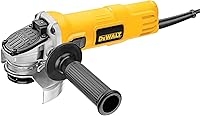
The Milwaukee 2880-20 carries a no-lock paddle and the highest score here. The DEWALT DWE4214 uses a lock-on slide switch, the Makita 9557PBX1 uses a paddle with a lock-on/off feature, and the DEWALT DWE43116 uses a trigger.
The switch type shapes how each one feels in your hand.
 Best for safer everyday grinding
Milwaukee 2880-20 M18 FUEL Cordless Angle Grinder

Which switch shuts off faster when you lose your grip?
The paddle shuts off faster, because releasing the lever cuts the motor without a second step. A slide switch with lock-on keeps running until you deliberately release it.
That one difference drives most of the safety story.
Grip a paddle and the motor runs. Let your hand relax and the lever springs back, so the wheel slows on its own.
There's no separate button to find when your fingers are already moving away from the tool.
The Milwaukee 2880-20 takes this further with a no-lock paddle. There's no way to latch the motor on, so the grinder can't keep spinning after your hand leaves the handle.
A slide switch works differently. Push the slider forward and the motor starts.
On many grinders, including the DEWALT DWE4214, a lock-on button holds it there so you can rest your thumb during a long cut.
What the lock-on does to the stop
The lock-on is the part to think about. With it engaged, the motor stays on until you push the slider back.
If the grinder slips, binds or catches an edge, the wheel is still turning while you move your hand to shut it down.
That's the trade-off in a sentence: the paddle stops on release, the slide stays on until you release it. For a tool that spins at up to 11,000 rpm, the release-first design leaves less room for error.
Paddle switch vs slide switch: the two side by side
The table shows the practical split: the paddle favors release safety and the slide favors steady, long work. Read the switch row first, then the power source and speed rows that follow it.
| Feature | Paddle switch | Slide switch |
|---|---|---|
| How it starts | Squeeze the lever | Push the slider forward |
| How it stops | Release your grip | Push the slider back or release it |
| Lock-on option | Some models have it (Makita 9557PBX1) | Common (DEWALT DWE4214) |
| Hands-off running | No-lock models never run hands-free | Lock-on holds the motor on |
| Best for | Short passes, safer everyday work | Long, steady cuts and repeated passes |
| Hand strain | Squeezing all the time | Lock-on eases the grip on long jobs |
The paddle's weak spot is hand fatigue. You squeeze the whole time the wheel is turning, which adds up on a long grinding job.
The slide's weak spot is the opposite: it's easy to run, but it asks more of you when the tool needs to stop.
Which switch is safer for a beginner?
The paddle is safer for a beginner, because the grinder stops when the grip does. A new user is more likely to lose control of the tool, and the release-first switch forgives that more often.
The Milwaukee 2880-20 is the pick for this group.
An angle grinder throws sparks and spins a hard wheel at high speed. A beginner is still learning where to stand, how to hold the tool and when the wheel is catching.
A no-lock paddle keeps the stop tied to the hand.
The Milwaukee's electronic clutch adds a second layer. It cuts power when the tool detects a kickback, so the motor stops before the grinder twists in your hands.
For a first grinder, that combination is hard to beat.
A slide switch with lock-on asks more of a beginner. You have to remember the motor is running without your hand on it, and you have to reach back to the slider when you want it to stop.
That's a small extra step that matters most when something goes wrong.
Which switch suits long cuts and steady work?
The slide switch with lock-on is easier for long, straight cuts, because the motor runs without your thumb on the switch. The DEWALT DWE4214 is built around this idea.
It pairs a lock-on slide switch with an 11 Amp motor and 11,000 rpm.
A long cut down a steel plate or a steady pass over a weld is more comfortable when you aren't squeezing a lever the whole time. The lock-on holds the motor on so you can adjust your grip, keep both hands on the body and focus on the wheel path.
The DWE4214 also brings a Dust Ejection System, which pushes debris out of the air intakes so it doesn't clog the motor. That matters when a long session throws a lot of dust and grit.
The Makita 9557PBX1 sits in the middle. Its extra-large paddle is easy to press and release, and its lock-on/off feature lets you run continuously when you want to.
You get the release safety of a paddle with the hands-off option of a slide. Its 7.5 Amp motor is smaller than the other corded grinders here, but the kit includes five grinding wheels, a diamond blade, both guards and a case.
When a trigger fits better than either
The DEWALT DWE43116 uses a trigger, not a paddle or slide. A trigger stops when your finger lifts, so it shares the paddle's release safety.
It pairs that with the 13 Amp motor, the most power in this group, and a 9,000 rpm rating.
A trigger grinder asks for a steady finger during long cuts. There's no lock-on here, so the motor stops when you relax.
That's the trade-off for the release-first control and the extra power. For heavy work where you want your finger in charge, it's the pick.
Our angle grinder vs die grinder comparison helps if you aren't sure a full-size grinder is the right tool at all.
Who should buy which grinder?
Pick the paddle for everyday safety and the slide or trigger for long, controlled sessions. Here's the short version by user and job.
For most home users: the Milwaukee 2880-20
The Milwaukee 2880-20 is the pick for most people because its no-lock paddle stops the motor the moment your hand leaves the handle. The electronic clutch adds kickback protection on top.
It runs on M18 batteries you may already own, so there's no cord to route across the work. It's a tool-only kit, so batteries and a charger cost extra.
For long cutting sessions: the DEWALT DWE4214
The DEWALT DWE4214 is the choice when you cut or grind for minutes at a time. The lock-on slide switch holds the motor on so your hand can relax, and the 11 Amp motor spins at 11,000 rpm.
A beginner should treat the lock-on with care, but an experienced user gets a steady, hands-free cut.
For comfortable long grinds: the Makita 9557PBX1
The Makita 9557PBX1 suits someone who wants a big paddle but also needs to run continuously. Its extra-large paddle is easy to press and its lock-on feature holds it on.
The kit covers you with wheels, guards, a diamond blade and a case. Its 7.5 Amp motor is the smallest here, so it suits lighter work.
For heavy, controlled cuts: the DEWALT DWE43116
The DEWALT DWE43116 is the pick for the toughest jobs. Its trigger stops when your finger lifts, and the 13 Amp motor drives a 9,000 rpm wheel.
If you cut thick metal and want the most power with release-first control, this is the one. If you already lean toward a brand, our DEWALT angle grinder and Milwaukee angle grinder roundups cover more models.
Does switch type change how fast the wheel spins?
No. The switch starts and stops the motor, but top speed comes from the motor and gearing.
The four grinders here run at 8,500 to 11,000 rpm.
Pick the switch first, then check the speed against the work.
The Milwaukee 2880-20 reaches 8,500 rpm on its M18 battery. The two corded DEWALT models run at 11,000 rpm and 9,000 rpm, and the Makita 9557PBX1 tops out at 11,000 rpm.
A higher speed helps with fast material removal on soft metal. A lower top speed can suit heavier wheels and steady control.
The switch type does change how much control you have over when the wheel starts. A soft-start feature, like the one on the Makita, eases the motor up to speed so the tool doesn't jump at startup.
That's a comfort point rather than a safety feature, but it helps on a big wheel.
What about variable speed?
Some grinders let you dial the speed down for polishing or delicate work. A variable speed angle grinder lets you match the wheel to the job, and the switch type is separate from that dial.
A slide switch with lock-on plus a speed dial gives you both hands-free running and a speed you set. A paddle with a speed dial gives you release safety and control over the spin.
Decide which matters more for your work, then look for both features together.
Which switch is easier to live with day to day?
The paddle is easier for short jobs and the slide is easier for long ones. Think about the typical session, not the worst case.
A home user who grinds for a minute at a time gets more from release safety.
Someone who runs the wheel for five minutes at a time gets more from lock-on.
The paddle's downside is hand strain. Squeezing a lever for a long cut tires your grip.
The slide's downside is the extra step to stop. Reaching for the slider when the tool is running takes more care than letting go of a lever.
Weight matters too. The Makita 9557PBX1 is a light 4.5 lb with its small barrel grip.
The DEWALT DWE43116 is 5.7 lb with a 13 Amp motor. A lighter tool is easier to hold in one position, which offsets some of the paddle's strain.
Set the tool down safely
Whichever switch you choose, the wheel keeps spinning after the motor stops. Wait for it to stop fully before you set the grinder down or change a wheel.
On a slide-switch model with lock-on, release the switch first, then wait for the wheel to coast to a stop. That habit matters more than the switch type.
Paddle switch vs slide switch: which should you choose?
For most people, choose a paddle switch grinder, and the Milwaukee 2880-20 is the pick here because its no-lock paddle releases the motor when your grip does. The electronic clutch and M18 battery platform make it the safest and most flexible everyday choice.
Choose the DEWALT DWE4214 if you do long, steady cutting and want a lock-on slide switch to rest your hand. Choose the Makita 9557PBX1 if you want a big paddle but still need continuous running.
Choose the DEWALT DWE43116 if you want the most power and a trigger that stops when your finger lifts.
The angle grinder paddle switch vs slide switch decision comes down to one question: do you want the motor to stop when you let go, or keep running while your hand rests? For a home shop and a first grinder, the paddle wins.
For long production cuts, the slide switch with lock-on earns its place.
Frequently asked questions
Is a paddle switch safer than a slide switch on an angle grinder?
Yes, a paddle switch is generally safer for most work because it releases and shuts off when your grip loosens. A slide switch with lock-on stays running until you open it, which is useful for long cuts but needs more care when you set the tool down.
What is the difference between a paddle switch and a slide switch?
A paddle switch is a large lever you squeeze to run the grinder; let go and it stops. A slide switch is a smaller slider you push forward to start, often with a lock-on button so the motor keeps running without your hand on it.
Do paddle switches have a lock-on button?
Some do. The Makita 9557PBX1 paddle switch has a lock-on/off feature for continuous operation, while the Milwaukee 2880-20 uses a no-lock paddle.
Check the switch type before you buy if lock-on matters to you.
Which switch is better for cutting metal?
A slide switch with lock-on is often easier for long, straight cuts because the motor keeps running while you adjust your grip. A paddle switch still works well, but you hold it down for the whole cut, which can tire your hand on long jobs.
Can I use a paddle switch grinder for sanding and polishing?
Yes. A paddle switch works for sanding and polishing, and you release it easily between passes.
A slide switch with lock-on can be handier when you want a steady speed over a large surface without keeping your hand squeezed.
Is a trigger switch the same as a paddle switch?
No. A trigger switch is a small finger lever like a drill, while a paddle switch is a larger lever you press with your palm or fingers.
The DEWALT DWE43116 uses a trigger, and the Makita 9557PBX1 uses a paddle.