9 Best Pneumatic Die Grinders (October 2026)
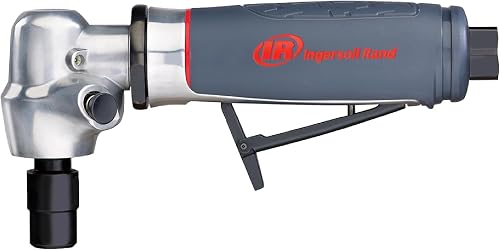
The best pneumatic die grinders include the Ingersoll Rand 301B Air Die Grinder for tight spaces, the Ingersoll Rand 5102MAX Air Die Grinder for abrasive changes, and the Ingersoll Rand 3101G Edge Series Air Die Grinder for right-angle versatility.
On this page (6 sections)
The Ingersoll Rand 301B Air Die Grinder is the top pick for tight spaces, with a right-angle head and a self-locking throttle. For straight access, consider the Ingersoll Rand 308B; the Ingersoll Rand 5102MAX has a spindle lock for abrasive changes.
A pneumatic die grinder runs on compressed air and holds small mounted accessories in a collet. It suits detail grinding, deburring, polishing and similar work where a larger disc grinder is awkward.
Start by choosing a straight or right-angle head. Our guide to what a die grinder is used for explains common jobs and accessories, while the angle grinder versus die grinder comparison helps with tool choice.
Our picks at a glance
-
1

-
2
-
3
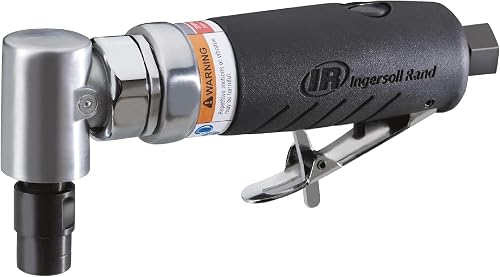 Best for right-angle versatility
Ingersoll Rand 3101G Edge Series Air Die Grinder
8.4/10 our score
See it on Amazon
- 4
 Check it
AIRCAT 6280 Angle Air Die Grinder
Best for speed adjustment - 5
 Check it
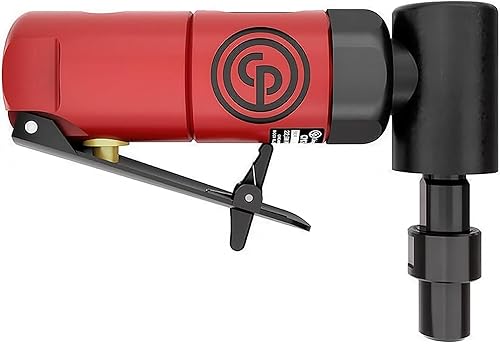
Chicago Pneumatic CP875 Right Angle Air Die Grinder
Best for compact maintenance work - 6
 Check it
Ingersoll Rand 308B Air Die Grinder
Best for straight grinding - 7
 Check it
Ingersoll Rand 302B Air Die Grinder
Best for a balanced angle tool - 8
 Check it
AIRCAT 6255 Right Angle Air Die Grinder
Best for confined blending - 9
 Check it
Chicago Pneumatic CP872 Air Die Grinder
Best for high-speed straight work
How we chose these pneumatic die grinders
The best pneumatic die grinder depends on access, control and the air supply you already have. We compared motor power, stated free speed, head shape, weight and control features, then matched each tool to a practical shop use.
Air tools require a compressor, hose and fittings, so check air demand and connection requirements before choosing. The CP872 states 20 CFM air consumption at load.
Our score weighs specs, features and buyer feedback against what you're shopping for. No single speed or horsepower figure makes a grinder best for every task, and a higher free speed does not guarantee faster material removal.
Compare the pneumatic die grinders
The main differences are head shape, stated speed and controls. Use this table to narrow the list, then confirm accessory fit and compressor capacity for your setup.
| Product | Best for | Head shape | Free speed | Weight | Our score |
|---|---|---|---|---|---|
| Ingersoll Rand 301B Air Die Grinder | tight spaces | Right angle | 21,000 rpm | 1.02 lb | 8.6 |
| Ingersoll Rand 5102MAX Air Die Grinder | abrasive changes | 8.5 | |||
| Ingersoll Rand 3101G Edge Series Air Die Grinder | right-angle versatility | Right angle | 20,000 rpm | 8.4 | |
| AIRCAT 6280 Angle Air Die Grinder | speed adjustment | 18,000 rpm | 8.3 | ||
| Chicago Pneumatic CP875 Right Angle Air Die Grinder | compact maintenance work | 90-degree angle | 22,500 rpm | 0.99 lb | 8.2 |
| Ingersoll Rand 308B Air Die Grinder | straight grinding | Straight | 25,000 rpm | 8.1 | |
| Ingersoll Rand 302B Air Die Grinder | a balanced angle tool | Right angle | 20,000 rpm | 8.0 | |
| AIRCAT 6255 Right Angle Air Die Grinder | confined blending | 18,000 rpm | 8.0 | ||
| Chicago Pneumatic CP872 Air Die Grinder | high-speed straight work | Straight | 27,000 rpm | 7.9 |
Pneumatic die grinders for detail and confined work
A right-angle grinder can help when a straight body cannot line up with the work. These picks vary in speed, weight and throttle or exhaust features.
Ingersoll Rand 301B Air Die Grinder: Best for tight spaces
- Right-angle head
- 21,000 rpm
- 0.25 hp motor
- 1.02 lb
A compact right-angle design helps reach confined areas. It combines a 0.25 hp motor with 21,000 rpm and a self-locking throttle.
Pros
- Right-angle head for confined areas
- Self-locking throttle
- Front exhaust
Cons
- Air compressor not included
- Sold individually
The 301B is the first choice when your work sits behind a bracket, inside a corner or in another confined area. Its right-angle head helps it reach tight spaces, and its listed weight is 1.02 lb.
The 0.25 hp motor reaches 21,000 rpm for grinding, cutting and polishing. The self-locking throttle keeps the grinder disengaged until activated, and the front exhaust helps keep the workspace clean.
This tool is sold individually, so plan for a compressor and suitable air hose. It includes 1/4 in and 6 mm collets plus two wrenches.
Pick it when maneuverability and controlled access matter most. If you need a straight tool for open surfaces, the 308B below is a more natural fit.
Ingersoll Rand 5102MAX Air Die Grinder: Best for abrasive changes
- 0.4 hp motor
- Spindle lock
- Low-profile throttle
A spindle lock is designed to reduce downtime during abrasive changes. The 0.4 hp motor and low-profile throttle suit buyers who value power and easy control.
Pros
- Spindle lock for abrasive changes
- Low-profile throttle
- Composite housing
Cons
- Air compressor not included
- Sold individually
The 5102MAX is a useful choice if you want a spindle lock for abrasive changes. Its low-profile throttle and 0.64 kg weight also suit buyers who want a lighter tool with an accessible control.
The specifications give a maximum speed of 20,000 rpm. A product description gives 25,000 rpm, so check the speed with the seller if it matters to your choice.
Its composite housing and rear exhaust are stated features. It is sold individually, and you will need a separate compressor.
Choose it when the spindle lock is useful in your workflow. For a right-angle pick with a consistent maximum speed, compare the 301B or CP875.
Ingersoll Rand 3101G Edge Series Air Die Grinder: Best for right-angle versatility
- Right-angle head
- 0.33 hp motor
- 20,000 rpm
- Self-locking throttle
This right-angle grinder pairs a 0.33 hp motor with 20,000 rpm. Its self-locking throttle and aluminum housing suit general shop and garage work.
Pros
- Right-angle head
- Aluminum housing
- Self-locking throttle
Cons
- Air compressor not included
- Weighs 590 g
The 3101G suits buyers who want a right-angle head with a 0.33 hp motor. It reaches 20,000 rpm and has aluminum housing and a self-locking throttle.
At 590 g, it weighs more than the 301B. The right-angle configuration helps with access around corners, and it is described for automotive and fabrication applications.
The rear exhaust directs air and debris away from the work area. The tool is sold individually, and an air compressor is not included.
Choose the 3101G for a general-purpose right-angle setup. Consider the CP875 if keeping the tool short and light is your main concern.
AIRCAT 6280 Angle Air Die Grinder: Best for speed adjustment
- 18,000 rpm
- 0.75 hp as stated in the product title
- Top-mounted speed control
- 79 dBA
The top-mounted speed control sits at the grip. AIRCAT describes a tuned exhaust system and composite handle.
Pros
- Top-mounted speed control
- Composite handle and grip
- Tuned exhaust system
Cons
- Air compressor not included
- Weighs 1.8 lb
The AIRCAT 6280 stands out for speed control mounted at the top of the grip. That placement keeps the speed switch close to your hand while you work.
AIRCAT describes the 6280 as having an 18,000 rpm speed and a 0.75 hp motor. Its specifications also give a tuned exhaust system rated at 79 dBA, along with a composite handle and Erickson-style precision collet.
At 1.8 lb, it weighs more than several other picks here. The tool includes a wrench, but the air compressor and accessories are separate.
Choose it when grip-mounted speed control and the specified noise level matter to you. For a lighter right-angle tool, compare the CP875.
Chicago Pneumatic CP875 Right Angle Air Die Grinder: Best for compact maintenance work
- 90-degree head
- 22,500 rpm
- 0.3 hp
- 0.99 lb
The short, lightweight 90-degree head is designed for limited spaces. Its safety throttle lever and built-in air regulator add control.
Pros
- 4.88 in length
- Safety throttle lever
- Built-in air regulator
Cons
- Air compressor not included
- Angle head limits straight access
The CP875 is a compact right-angle grinder for maintenance work in limited spaces. It is 4.88 in long and weighs 15.84 oz, with a 0.3 hp motor and a 22,500 rpm free speed.
A safety throttle lever helps prevent accidental startup, while the built-in air regulator supports controlled operation. Its aluminum housing has a composite over-sleeve, and the rear exhaust directs airflow away from the work.
The tool includes a wrench spanner. Its title and specifications identify a 1/4 in collet, and the manufacturer's description also mentions 6 mm.
Pick the CP875 if a compact angle head and low weight are priorities. The 301B is another option if you prefer its self-locking throttle and front exhaust.
Straight pneumatic die grinders for exposed surfaces
A straight tool is a practical choice when you can approach the work directly. The models below offer different speeds and control features for open access.
Ingersoll Rand 308B Air Die Grinder: Best for straight grinding
- Straight configuration
- 0.33 hp motor
- 25,000 rpm
- 1.02 lb
The straight body lines up naturally for work on exposed surfaces. A self-locking throttle and composite housing round out its controls and construction.
Pros
- Straight body
- Self-locking throttle
- Includes 1/4 in and 6 mm collets
Cons
- Air compressor not included
- Sold individually
The 308B is a good fit for straight grinding, cutting and polishing. Its 0.33 hp motor reaches 25,000 rpm, and the straight shape gives you direct alignment on exposed edges and surfaces.
The self-locking throttle keeps the tool disengaged until activated. It has composite housing and ball-bearing construction, with a rear exhaust.
The package includes 1/4 in and 6 mm collets and two wrenches. The grinder is sold individually, and an air compressor is not included.
Choose it for a straight body and a maximum speed of 25,000 rpm. If you work around corners, the right-angle 301B or CP875 may be easier to position.
Ingersoll Rand 302B Air Die Grinder: Best for a balanced angle tool
- Right-angle head
- 0.33 hp motor
- 20,000 rpm
- 1.3 lb
This right-angle model offers 0.33 hp and 20,000 rpm with a self-locking throttle. Its composite housing and rear exhaust fit general grinding and finishing tasks.
Pros
- Right-angle head
- Self-locking throttle
- Composite housing
Cons
- Air compressor not included
- Sold individually
The 302B combines a right-angle head with a 0.33 hp motor and 20,000 rpm. It is described for grinding, cutting, polishing and finishing in areas where a straight body is hard to position.
Its self-locking throttle keeps it disengaged until activated. The composite housing and rear exhaust are stated features, and it weighs 1.3 lb.
The 302B includes two wrenches, a 6 mm collet and manuals. You will need to supply the compressor and accessories for the task.
Choose it if the right-angle form and 0.33 hp rating fit your work. If weight matters more, compare the CP875 at 15.84 oz.
AIRCAT 6255 Right Angle Air Die Grinder: Best for confined blending
- Right-angle form
- 18,000 rpm
- 0.4 hp
- 82 dBA
AIRCAT describes the 6255 for deburring, blending, smoothing and porting in confined areas. Its ergonomic handle suits close work.
Pros
- Right-angle form
- Ergonomic handle
- Tuned exhaust system
Cons
- Air compressor not included
- Published speed figures differ
The AIRCAT 6255 is described for blending, smoothing, deburring and porting in confined areas. Its ergonomic handle suits close work.
AIRCAT describes an 0.4 hp motor, 18,000 rpm speed and an 82 dBA noise level. Its specifications also give 18,000 rpm, though other details describe the model as 20,000 rpm.
The tool's angle form can suit work where a straight grinder is hard to line up. Check collet and accessory compatibility, and plan for a separate compressed-air source.
Choose it when the handle design and 82 dBA noise specification matter. For a higher stated speed and a safety throttle lever, the CP875 is another angle-head option.
Chicago Pneumatic CP872 Air Die Grinder: Best for high-speed straight work
- Straight head
- 0.63 hp
- 27,000 rpm
- Safety throttle lever
The CP872 pairs a straight design with a 0.63 hp motor and 27,000 rpm. Its safety throttle lever and built-in regulator support controlled operation.
Pros
- 27,000 rpm stated maximum
- Safety throttle lever
- Built-in regulator
Cons
- Air compressor not included
- Air consumption is stated as 20 CFM at load
The CP872 has a stated maximum speed of 27,000 rpm, the highest among these picks. Its straight design, 0.63 hp rating and safety throttle lever suit precision grinding, porting, smoothing and deburring.
Chicago Pneumatic gives air consumption at 20 CFM under load. Check that your compressor can supply enough air at the required pressure; the built-in regulator matches speed to the job.
The grinder weighs 1.3 lb and includes a wrench spanner. It has a 1/4 in collet, and the manufacturer's description also mentions a 6 mm collet.
Choose the CP872 when a straight body and high stated speed suit your work. Its stated air demand makes compressor capacity an important check.
What should you check before buying an air die grinder?
Check head shape, collet size, accessory speed rating and compressor capacity before choosing a pneumatic die grinder. These details determine whether the tool fits your work and air system.
Does the head need to be straight or angled?
A straight grinder works well when the surface is open and you can line up behind the accessory. A right-angle grinder can reach around corners or into tighter spaces, though its head may limit access in some orientations.
If your jobs vary, consider which tool shape you use most often. Our die grinder uses and accessory guide explains common tasks and accessories.
Can your compressor supply the air demand?
Match the compressor's delivered airflow at working pressure to the grinder's air needs. The CP872 states 20 CFM at load.
Use the grinder manual to confirm pressure, hose and fitting requirements. Air tools also need lubrication and maintenance when the manufacturer calls for it.
Which collet and accessory do you need?
These models use 1/4 in collets, and some also include a 6 mm collet. Confirm the shank size of your mounted point, burr, brush or polishing accessory before you order.
Check the accessory's maximum rated speed against the grinder's free speed. Secure the workpiece and follow the instructions for both tool and accessory.
For broader tool selection, see our guide to angle grinder sizes and the angle grinder safety basics.
Which pneumatic die grinder should you choose?
Choose the Ingersoll Rand 301B for tight spaces, the 308B for direct straight access, or the CP872 when its high stated speed and air demand fit your compressor. For a compact right-angle grinder, compare the CP875 and 3101G by weight and throttle style.
A pneumatic model makes sense when you already have a suitable air system and want continuous air power. If you need to work away from a compressor, compare our best cordless die grinders before deciding.
A die grinder uses small mounted accessories for detail work. If you need a larger disc for cutting or grinding, our angle grinder discs guide explains the common disc types.
Our top 3 picks at a glance
-
1
-
2
-
3
Best for right-angle versatility
Ingersoll Rand 3101G Edge Series Air Die Grinder
8.4/10 our score
See it on Amazon
Frequently asked questions
What is the best pneumatic die grinder for general use?
The Ingersoll Rand 301B is a strong general pick if you need a compact right-angle tool for confined work. Its 0.25 hp motor, 21,000 rpm speed and self-locking throttle suit grinding, cutting and polishing.
Choose a straight model if your work is mostly on open surfaces.
Should I choose a straight or right-angle air die grinder?
Choose a straight grinder for direct access to exposed surfaces, edges and openings. A right-angle model can make it easier to reach around corners or work in a confined area.
Match the head shape to your access needs, then check the tool's collet and compatible accessories.
What compressor do I need for a pneumatic die grinder?
Check the grinder's air consumption and pressure requirements against the compressor's delivered airflow at the needed pressure. The CP872 states 20 CFM air consumption at load, so confirm your compressor can support its demand.
The tools here are sold individually and do not include an air compressor.
Can a pneumatic die grinder cut metal?
A die grinder can cut or shape metal when fitted with an accessory made for the material and tool. Several picks here are described for cutting, grinding, deburring or polishing.
Use an accessory within its speed rating, secure the work, and follow the grinder and accessory instructions.
Is an air die grinder the same as an angle grinder?
No. Die grinders use a collet to hold small mounted accessories, while angle grinders typically use a disc and guard for larger surface work.
Choose a die grinder for detail work and access around small features.
Compare the tools in our angle grinder vs die grinder guide.


