Angle Grinder Sizes Compared
Angle grinder sizes from 4.5 to 9 inches fit different jobs: smaller wheels are easier to position, while larger wheels reach farther. Choose the smallest approved size that can handle your usual work.
On this page (8 sections)
- What do angle grinder sizes measure?
- Are 4.5 and 5 inch angle grinders enough?
- When should you choose a 7 inch grinder?
- Who should buy a 9 inch angle grinder?
- How should you set up a grinder for its wheel size?
- Does a larger grinder cut deeper?
- What common mistakes should you avoid?
- Which angle grinder size should you choose?
Angle grinder sizes from 4.5 to 9 inches fit different work, from controlled cuts to jobs that need more wheel reach. For most home and shop users, a 4.5 or 5 inch tool is easier to position; choose 7 or 9 inches when the work regularly calls for a larger wheel.
Start with the deepest cut and broadest grinding area you expect to handle. Then check the grinder manual for approved wheel diameters, guard requirements and operating instructions before you buy.
What do angle grinder sizes measure?
An angle grinder's size usually refers to its wheel diameter. A 4.5 inch grinder takes a smaller wheel than a 7 or 9 inch model, changing how much of the workpiece the wheel can reach in one position.
Diameter is only one part of the choice. Tool weight, body shape, handle arrangement, power source and the space around the workpiece affect how easily you can control the grinder.
For a wider overview, read angle grinders: sizes, types and how to choose. The main angle grinder parts guide explains the guard, spindle lock and handle you'll check while setting up.
Are 4.5 and 5 inch angle grinders enough?
A 4.5 or 5 inch grinder suits frequent general work when its reach is enough and you want a tool that's easier to position. The smaller wheel can fit more readily around compact workpieces and tight spaces than a larger disc.
Choose this range for manageable cutting, grinding or cleanup jobs where you can approach the work safely. Skip it if you repeatedly need a deeper reach or a wider grinding path than the wheel can provide.
The Milwaukee 2880-20 is a cordless grinder designed for both 4.5 and 5 inch wheels. It has an electronic clutch, overload protection and an anti-vibration side handle, plus compatibility with Milwaukee M18 batteries.
This is a practical fit if you already use M18 batteries and want to work without a power cord nearby. If you don't own compatible batteries, compare the full cordless setup before choosing it.
For either diameter, check that the wheel, guard and grinder are a permitted combination. A wheel that fits the spindle may still be unsuitable for the tool.
How do you choose between 4.5 and 5 inch grinder sizes?
Choose between 4.5 and 5 inch sizes by the tool's approved accessories and the reach your work needs. The difference in diameter is modest, so the specific grinder, guard and wheel availability matter more than assuming one size is always better.
A 5 inch wheel may give a little extra reach. Choose 4.5 inches if its wheel options cover your work and a compact tool is easier to handle in your workspace.
When should you choose a 7 inch grinder?
A 7 inch grinder suits broader work or demanding applications where the larger wheel's reach is useful. It needs more clearance and deliberate handling, so it is a poor fit for frequent detail work or small, crowded work areas.
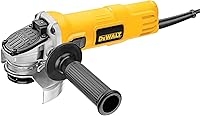
The DEWALT DW840 is a corded 7 inch grinder with a 13 amp motor rated at 8,000 RPM. Its tool-free keyless guard is designed to help redirect sparks, and external brush caps allow servicing.
Choose it if a corded tool fits your work area and you want the guard and service features described above. Skip it if most of your projects need a compact grinder or require work far from a suitable outlet.
The Makita GA7021 is another 7 inch choice. It has a 15 amp motor rated at 6,600 RPM, a tool-less wheel guard, a rubberized soft grip and a rear trigger switch with lock-on.
Its grip and switch may suit longer work sessions when those controls match your preferences. Choose a different size if a 7 inch wheel is more tool than your workpieces require.
Both 7 inch options are corded. Plan where the outlet and cord will sit before starting, and leave enough room to guide the wheel without pulling the cord across the work area.
Who should buy a 9 inch angle grinder?
A 9 inch grinder is for demanding work where a larger wheel's reach and material removal are more useful than compact handling. It is cumbersome for small workpieces and fine positioning, so most occasional household users should choose a smaller size.
The DEWALT DWE4559N is a corded 9 inch model rated at 6,500 RPM. Its features include overload protection, a dust ejection system, an anti-vibration trigger handle and a quick-change guard.
Consider it if your regular work needs a large wheel and you can safely manage the tool's size. Skip it for confined spaces, small parts or jobs where a 4.5 or 5 inch wheel already reaches the work.
How should you set up a grinder for its wheel size?
Set up the grinder with the approved wheel and guard, a stable workpiece and clear space around the wheel. Read the manual before fitting an accessory or changing wheel diameters, since each tool has specific limits.
Before plugging in or installing a battery, check that the wheel and guard are undamaged and correctly fitted. Make sure the workpiece cannot shift, and route the cord or position the battery so it won't interfere with your grip or movement.
Use eye and face protection, keep bystanders away, and hold the tool with both hands where its design allows. Wait for the wheel to stop before setting the grinder down.
For setup details about the guard, gear and kickback, read angle grinder safety guidance. The guide to cutting, grinding and flap discs can help you match an accessory to the job.
Does a larger grinder cut deeper?
A larger wheel can generally reach farther into a cut, but usable depth depends on the grinder, guard and wheel. Part of the wheel sits behind the guard and tool, so diameter alone doesn't tell you the exact cut depth.
Don't remove the guard or fit a wheel outside the tool's approved range to gain reach. Choose a grinder built for the work and follow the manual's limits.
What common mistakes should you avoid?
The main size mistake is choosing a wheel by diameter alone, without checking the grinder's manual and guard. A wheel that mounts on the spindle isn't automatically approved for that tool.
Other mistakes include buying a large grinder for occasional detail work, underestimating the clearance it needs, and letting a cord cross your work path. A small grinder can also be the wrong choice if your regular work needs more reach than its wheel provides.
Don't push a wheel into a cut to make up for a size mismatch. Secure the work, use the right accessory and stop if the setup feels unstable.
Which angle grinder size should you choose?
Choose 4.5 or 5 inches for manageable everyday work, 7 inches for broader demanding jobs, and 9 inches when large-wheel reach is a regular need. Buy the smallest approved size that comfortably reaches your usual work.
If you already use M18 batteries, the Milwaukee 2880-20 is the cordless 4.5 or 5 inch option here. For corded 7 inch work, compare the DEWALT DW840's service access with the Makita GA7021's grip and switch; consider the DEWALT DWE4559N only when 9 inch capacity fits the job.
The best angle grinder size is the one that reaches the work safely and remains manageable in your space. For more help comparing tool formats, see the angle grinder size and type guide.
Frequently asked questions
What is the most common angle grinder size?
A 4.5 inch grinder is a common general-purpose size for home and shop work because its smaller wheel is easier to position in many tight areas. Check the tool's manual and guard before choosing a disc, since the grinder's approved wheel sizes matter more than a disc's physical fit.
Is a 5 inch angle grinder better than a 4.5 inch one?
A 5 inch grinder can provide a little more reach, but it isn't automatically better for every job. Compare the tool's size, guard, wheel options, and handling, then choose a disc size the manufacturer approves.
A compact 4.5 inch grinder may be easier to guide in confined spaces.
What size angle grinder cuts deeper?
A 9 inch grinder can generally reach farther into a cut than a 4.5 or 5 inch model because it uses a larger wheel. Actual cutting depth depends on the tool, guard, wheel, and workpiece.
Follow the manual and use only an approved wheel and guard combination.
Can you put a 7 inch wheel on a 9 inch grinder?
Only use a wheel size approved for your grinder and guard. A smaller wheel may not be supported by the tool's guard or operating instructions, even if it mounts on the spindle.
Check the manual for permitted wheel diameters and accessories before changing sizes.