Angle Grinders: Sizes, Types and How to Choose
Choose an angle grinder by disc size, power source and the work you plan to do. A 4-1/2 in model is a practical starting point for many home tasks; choose a larger grinder when the job needs more reach.
On this page (11 sections)
- What does an angle grinder do?
- Which angle grinder size should you choose?
- Should you choose corded or cordless?
- Which switch and handle features matter?
- How do you match a disc to the task?
- What safety gear and setup do you need?
- How do you set up and change an angle grinder disc?
- How should you use and care for an angle grinder?
- What common angle grinder mistakes should you avoid?
- What should you check before buying an angle grinder?
- Which angle grinder should you choose?
An angle grinder spins an accessory for cutting, grinding or finishing materials such as metal and masonry. Choose one by the work you plan to do, the disc size that fits the job, and whether corded or cordless power suits your work area.
A 4-1/2 in grinder is a useful starting point for many home tasks. Larger models can reach farther in a pass, but they need more room and control.
The right accessory matters as much as the tool: a disc that fits the spindle may still be wrong for your material or task.
This guide covers the decisions that affect a useful purchase, from sizing and power to accessories, setup and care. It also compares three grinders with distinct strengths and a face shield for added coverage.
What does an angle grinder do?
An angle grinder spins a fitted accessory to cut, remove material or smooth a surface. The accessory determines the task, so match it to both the material and the work.
A thin cutting disc makes a narrow cut. A grinding wheel removes material from a surface, while a flap disc can smooth or blend it.
These accessories are not interchangeable just because they fit the same spindle.
Check the accessory label and instructions before use. Compare common options in our angle grinder disc types guide.
What jobs suit an angle grinder?
An angle grinder can help with metal cutting, weld cleanup, rust removal and masonry work when the tool and accessory are rated for that task. It can also sharpen some tools, but sharpening calls for a stable setup and careful control.
It isn't the right tool for every material or cut. Wood can bind or catch on a fast-spinning abrasive tool, so read our guide on whether angle grinders can cut wood before considering that work.
For very small, detailed work, an angle grinder may be too large to control precisely. A rotary tool or die grinder may suit tighter spaces and smaller accessories better; see our angle grinder and die grinder comparison if that distinction is unclear.
Which angle grinder size should you choose?
Choose the smallest grinder that can handle the depth and reach your work requires. Smaller models are easier to maneuver in tight spaces, while larger discs can reach farther across a pass.
Size refers to the accessory diameter the grinder accepts. The grinder, guard and accessory must all match; never fit a larger disc than the tool is designed to use.
| Common size | A sensible starting point for | Trade-off to consider |
|---|---|---|
| 4-1/2 in | General home tasks and smaller cuts | Less reach per pass than a larger disc |
| 5 in | Work that needs a little more disc reach | Confirm accessory and guard compatibility |
| 7 in | Broader grinding or deeper cuts | Larger tool needs more room and control |
| 9 in | Large, demanding jobs | More tool to handle and position |
These are broad task ranges, not a promise that every grinder of a size can do every job. Compare 4-1/2, 5, 7 and 9 in grinder sizes against the materials and cuts you expect to handle.
Is a 4-1/2 in angle grinder enough?
A 4-1/2 in grinder is enough for many home projects when its rated accessories can do the job. It can fit into tighter areas than a large grinder, but it may not reach through thicker material in one pass.
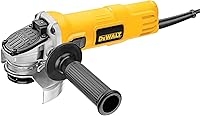
The DEWALT DWE4011 is a corded 4-1/2 in model with a 7 amp motor and a One-Touch guard that adjusts without a tool. It suits someone who wants a straightforward small grinder for work near an outlet.
Skip it if your work routinely needs a deeper reach than a 4-1/2 in disc allows, or if you need to move around without managing a cord. For many occasional users, though, a smaller grinder is easier to position than a large one.
When is a larger angle grinder useful?
A larger grinder is useful when the work needs more reach or a deeper cut than a small disc can provide. Its larger size also takes more space and can be harder to position precisely, so choose it to solve a real job need.
Before buying, check the tool's rated accessory size and required guard. Check the spindle as well.
A large disc won't become safe or compatible just because it can be attached to a smaller tool. If you're new to the category, a 4-1/2 in model is often the easier size to learn with.
Should you choose corded or cordless?
Choose corded for a fixed work area with power nearby, or cordless when freedom to move matters more. Your choice also depends on whether a battery platform you already own is compatible.
A corded grinder stays connected to an outlet as you work. You don't need to plan around a battery, but you do need to route the cord where it can't snag, cross the cutting path or interfere with your stance.
A cordless grinder avoids that cord and can travel between work areas. It relies on a compatible, charged battery, so factor in your existing tools and batteries before choosing a model.
Voltage alone doesn't tell you how long a particular job will take.
The Milwaukee 2880-20 is cordless and compatible with M18 batteries. It has an electronic clutch for kickback protection, overload protection and an anti-vibration side handle.
Choose it if you already use compatible M18 batteries or regularly work where a cord would get in the way. Skip it if you want a complete setup without buying or supplying a compatible battery, or if your work stays beside a dependable outlet.
Which switch and handle features matter?
Pick a switch and handle you can use comfortably while keeping both hands on the tool. Controls influence how the grinder starts, runs and stops, so check the design before you buy.
A paddle switch is held under your hand and, on a no-lock design, stops when released. A slide switch may stay on after you release it, depending on the model.
Read the manual and learn the stop procedure before the first cut.
A side handle gives you another grip point for control. Check whether it can mount in a position that works for your stance and the task.
Keep both hands on the grinder whenever its instructions call for a two-handed grip.
The Makita 9557PB is a corded 4-1/2 in grinder with a paddle switch, side handle and AC/DC switch. Its compact design has a small circumference barrel grip, and it includes a grinding wheel and the basic items needed to mount and protect it.
Consider it if you want a compact corded tool with a paddle switch and an included grinding wheel. Skip it if cordless movement is essential, or if you specifically want a guard that adjusts without a tool.
Learn what the guard, spindle lock and handle do before choosing a grip position or changing an accessory.
How do you match a disc to the task?
Match the accessory to the material, task, grinder size and rated speed. A correct fit helps the tool do the intended job and reduces the risk of using an accessory in the wrong way.
- Use a cutting disc only for cutting.
- Use a grinding wheel for grinding within its instructions.
- Use a flap disc for surface blending or finishing when it's rated for the material.
- Check that the accessory diameter and spindle fit the grinder.
- Check the accessory's maximum rated speed against the grinder's speed.
A disc can physically fit and still be unsuitable for the task. Read its label, inspect it for damage and follow the mounting directions.
Don't use a cracked or chipped accessory.
Choose the finish before you buy a disc. A cutting disc removes material along a narrow path; it isn't meant to grind a broad surface.
A grinding wheel removes more material from a surface, while a flap disc is a choice for blending and finishing. The accessory instructions should guide the final choice.
Don't force a disc to do another disc's job. For instance, pushing a cutting disc sideways can put stress on it, and using a grinding wheel to make a cut may produce a poor fit for the work.
Stop if the tool, accessory or material doesn't behave as expected.
What safety gear and setup do you need?
Use the guard, eye and face protection, hearing protection and other gear required by the tool and accessory instructions. Secure the workpiece and keep people clear of the work area.
A face shield adds face coverage, but it doesn't replace eye protection specified for grinding or cutting. NoCry's visor is ANSI Z87+ certified and has an anti-fog and anti-scratch coating.
Choose this shield if you want an adjustable visor that can fit over prescription glasses. Skip it if you need it to replace the eye protection required for your task.
A face shield is one part of the setup, not a substitute for the rest.
Before starting, check that the guard is fitted and positioned between you and the wheel. Keep a firm grip, use both hands, and stand where sparks and debris travel away from you and other people.
Kickback can happen if a disc binds or catches. Don't twist a cutting disc in a cut, and keep control if the accessory stalls.
For a fuller checklist, read our angle grinder safety guide.
How should you prepare the work area?
A clear, stable work area makes it easier to control the grinder. Secure the workpiece so it can't shift, and make sure the material can be supported without pinching the disc as the cut finishes.
Move flammable items and bystanders away from sparks and debris. Check the cord path on a corded grinder, or make sure the battery is seated on a cordless model.
Keep the work area lit and leave room to hold and guide the tool without reaching awkwardly.
Before plugging in or fitting a battery, verify that the correct guard and accessory are installed. Follow the grinder and accessory manuals for any specific setup steps.
If the workpiece can't be supported securely, change the setup before starting.
How do you set up and change an angle grinder disc?
Disconnect the power source before you mount, remove or inspect an accessory. Use the tool's instructions to fit the disc, position the guard and tighten the mounting parts.
Check the accessory's diameter, spindle fit, task rating and maximum speed. Inspect it for cracks, chips or other visible damage, and don't use it if anything looks wrong.
Use the wrench or accessory-change method specified for the grinder.
Once mounted, make sure the guard is in place and oriented for the task. Reconnect power only after the work area is clear and the tool is ready to use.
Don't hold the grinder's switch while changing a disc or checking its fit.
The DEWALT DWE4011 has a tool-free Quick-Change wheel release and a One-Touch guard. Those features can simplify wheel changes and guard adjustment, but you still need to disconnect power and follow the manual.
How should you use and care for an angle grinder?
Let the accessory do the work and keep the tool under control. Forcing the grinder can make it harder to guide and may cause the accessory to bind.
Start with a stable stance and a firm two-handed grip. Bring the accessory to the work as directed in the manual, keep it aligned with the task and avoid twisting it in a cut.
If the disc binds, don't force the tool through the material.
After use, disconnect power before cleaning or checking the grinder. Keep vents and controls clear of dust, and inspect the guard, handle, cord or battery contacts for damage.
Follow the manufacturer's instructions for cleaning and service.
Store the grinder and accessories where they won't be struck or exposed to moisture. Keep discs protected from damage, and don't keep an accessory that is cracked or chipped.
Regular checks help you spot problems before the next job.
What common angle grinder mistakes should you avoid?
Most avoidable problems come from a mismatched accessory, a poor setup or trying to force the tool. Check the manual and accessory label before each job, even if you've used a similar grinder before.
- Fitting an oversized disc: Use only the size the grinder and guard are designed for.
- Using the wrong type of disc: Cutting, grinding and finishing accessories have different purposes.
- Ignoring speed limits: The accessory's rated speed must be suitable for the grinder.
- Skipping the guard or handle: Install the parts required for the tool and task.
- Starting before securing the work: Clamp or support the piece so it can't shift or pinch the disc.
- Twisting a disc in a cut: Keep the accessory aligned with the cut and don't force it sideways.
- Working near people or flammable material: Move them and anything that could catch away from sparks and debris.
- Choosing size by power alone: A larger tool can be harder to position and may be unnecessary for your work.
If you're uncertain about a material, accessory or setup, pause and check the manuals. A grinder is a poor choice when the task can't be done with a rated accessory and a stable, controlled setup.
What should you check before buying an angle grinder?
Check the accessory size, power source, switch, guard and spindle before choosing. These details tell you whether the grinder fits your work and the accessories you intend to use.
- Name the job. Decide what material you'll work on and whether you need to cut, grind or finish it.
- Choose disc size. Match it to the depth and reach the job requires, with enough room to control the tool.
- Pick the power source. Choose corded for work near an outlet or cordless for movement between areas.
- Compare controls. Consider switch style, side-handle position and how the guard adjusts.
- Confirm accessory fit. Check the spindle, disc diameter and rated speed.
- Plan the protection. Make sure the required guard and safety gear suit the work.
- Check what's included. A grinder may come with some accessories or tools, while a tool-only model may need a separate battery or wheel.
Avoid buying a larger grinder just because it seems more capable. A tool that fits the work and feels manageable in your workspace is a better match for many jobs.
Which angle grinder should you choose?
Choose a 4-1/2 in corded grinder for common work near an outlet, or a cordless model when moving freely matters more. Move to a larger size only when the job needs its extra reach, and make sure every accessory is rated for the tool.
The DEWALT DWE4011 suits buyers who want a corded small grinder with a One-Touch guard and tool-free wheel release. The Makita 9557PB is a compact corded alternative with a paddle switch and side handle.
Choose the Milwaukee 2880-20 if you work away from outlets and already have compatible M18 batteries.
Start with our angle grinder sizes guide if disc diameter is your main question, or review angle grinder parts before settling on a guard and handle setup.
Frequently asked questions
What size angle grinder should I get?
A 4-1/2 in angle grinder is a practical starting point for many home users because it accepts common small grinder accessories and is easier to position than a large model. Choose a larger size when the work needs a deeper cut or broader reach, and confirm the tool, guard and disc are rated for that size.
Can an angle grinder cut and grind?
Yes. An angle grinder can cut or grind when you fit an accessory rated for the material and task.
Cutting discs are made for cutting, while grinding wheels and flap discs work on surfaces.
Check the accessory instructions, and never use a disc outside its rated purpose.
Is a corded or cordless angle grinder better?
A corded grinder suits a work area with reliable power and little need to move around. A cordless grinder avoids a power cord and can travel between work areas, but it depends on a compatible, charged battery.
Choose based on where you work and how often you need to move.
Do you need a guard on an angle grinder?
Keep the guard installed and positioned between you and the accessory wherever the tool and accessory instructions require it. A guard helps contain debris, but it does not replace eye and face protection, safe handling or the correct disc.
Check the manual before adjusting or removing any part.
What should you check before changing an angle grinder disc?
Disconnect the power source before changing a disc. Check that the accessory matches the grinder's size, spindle and intended task, inspect it for damage, and follow the grinder and disc instructions for mounting and tightening.
Refit and position the guard before using the tool.