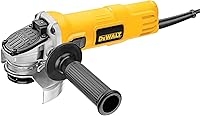
What Amp Angle Grinder Do You Need?
Match amps to wheel size and duty: about 7 amps for a 4-1/2 inch grinder on light and medium work, 11 amps for steady 4-1/2 inch cutting and grinding, and 13 amps when you step up to a 7 inch wheel. Pick the lower amp class when the tool runs in short bursts, and step up when it runs for minutes at a time.
On this page (7 sections)
The amp rating tells you how much current the motor can draw, so it is a rough guide to how hard the grinder can work before it slows. For most home and shop jobs, a 7 amp 4-1/2 inch grinder covers light cutting and grinding, and an 11 amp model covers steady work.
Step up to 13 amps when you move to a 7 inch wheel.
The answer to what amp angle grinder do I need is rarely "the biggest one". Amps only help when the wheel size and the job match them.
A 13 amp motor turning a 7 inch disc cuts deeper and holds speed longer than a small grinder can, but it also weighs more and draws more current.
Think of amps as the motor's capacity, not its output at the wheel. Two grinders with the same amp figure can feel very different in your hands because of weight and speed.
That is why the sensible way to choose is to start from the wheel and the task, then pick the amp class that supports it.
This guide walks through the amp bands and what each one is good for. If you are still choosing a tool type, our angle grinder guide covers the main body styles and switch types.
What amp angle grinder do I need for each wheel size?
Start with the wheel size, then choose amps to match. A 4-1/2 inch grinder works well at 7 to 11 amps, while a 7 inch grinder needs about 13 amps to drive the larger disc through metal and masonry.
The wheel sets the ceiling on what the tool can do. A bigger disc has more cutting edge and removes more material per turn, so it needs more torque to keep spinning under load.
That is why the largest wheels come with the largest motors.
The table below lines up the three sizes people ask about most with typical amp classes and the work each one suits. Treat it as a starting map, not a rule that every model follows.
| Wheel size | Typical amps | Best for | Watch for |
|---|---|---|---|
| 4 inch | 4 to 7 amps | Light trim, small welds, tight spots | Slow on thick metal |
| 4-1/2 inch | 7 to 11 amps | General cutting, grinding, weld cleanup | Duty cycle on long cuts |
| 7 inch | 13 amps and up | Thick plate, masonry, large surface prep | Weight and current draw |
Is a 7 amp grinder enough for a 4-1/2 inch wheel?
Yes, for light and medium work. A 7 amp motor spins a 4-1/2 inch wheel fast enough for quick cuts, weld dressing and rust removal.
The DWE4012 runs at 12,000 rpm on a 7.5 amp motor, so it has speed on its side.
The limit shows up in long, steady cuts. A 7 amp motor works harder to hold speed when you lean on the disc, and it will heat up sooner than an 11 amp model doing the same job.
Keep the passes short and let the tool cool between them.
This class also tends to be lighter and easier to control. The DWE4012 weighs 16 ounces, so it is comfortable for overhead work and one-handed touch-ups.
For a first grinder or occasional jobs, 7 amps is a good place to start.
When should I choose 11 amps instead?
Choose 11 amps when the grinder will do steady cutting and grinding rather than short bursts. An 11 amp 4-1/2 inch model holds speed better under load, which matters for long cuts through steel, repeated weld cleanup and shaping work.
The DWE402N is the example here: an 11 amp motor at 11,000 rpm on a 4-1/2 inch wheel. The higher current draw supports more material removal and better overload protection, so the tool recovers instead of stalling when you push it.
The trade-off is weight and current. This model weighs 6.3 pounds against 16 ounces for the 7 amp grinder, so it tires your arm sooner in overhead positions.
It also draws more current, which matters on shared circuits.
For a shop that uses one grinder for most metal work, 11 amps is the practical middle. Compare the body styles in our angle grinder vs die grinder guide if you also need reach into tight spots.
What do I get from a 13 amp 7 inch grinder?
A 13 amp motor is what a 7 inch wheel needs to work properly. The DW840 pairs a 13 amp motor with a 7 inch disc at 8,000 rpm, giving it the torque to drive the larger wheel through demanding metal and masonry jobs.
The bigger wheel reaches deeper and covers more surface per pass. That makes this class the choice for thick plate, long straight cuts and large-area surface prep.
The DW840 also has a tool-free keyless guard and a spindle lock for single-wrench wheel changes.
The costs are real. The DW840 weighs 12.1 pounds, so it is a two-hand tool that tires you quickly when held up.
It also draws more current than the smaller classes, so plan the outlet before you buy. Our angle grinder sizes comparison helps you weigh the wheel step against the extra weight.
How do amps affect performance beyond raw power?
Amps are not the same as speed. A higher amp motor usually delivers more torque and better overload protection, while rpm stays tied to the wheel size and the model's design.
That is why an 11 amp 4-1/2 inch grinder does not necessarily spin faster than a 7 amp one.
Think of amps as how hard the motor can pull, and rpm as how fast it spins. The DWE4012 runs at 12,000 rpm, faster than the DWE402N at 11,000 rpm, even though the DWE402N draws more current.
The smaller motor trades torque for speed.
In use, this shows up as how well the grinder holds speed when you press into the work. A higher amp motor keeps turning closer to its no-load speed under load, so the disc cuts steadily instead of bogging down.
That steadiness is what makes an 11 amp grinder feel stronger.
Heat is the other factor. More amps mean more work per pass before the motor heats, so the tool can run longer between rests.
Lower amp grinders do the same job but need more breaks. For a buyer choosing between classes, ask how long each cut will run before the answer is obvious.
What is duty cycle and why does it matter?
Duty cycle describes how long a tool can run before it needs to cool. A grinder rated for continuous use can run without a set rest period, while many hand grinders expect breaks between heavy passes.
The amp class is a rough guide to how much work the motor can take.
The practical version is simple. A 7 amp grinder doing steady work heats up faster than an 11 amp model on the same job.
If you cut for a minute and then reposition the workpiece, neither class struggles. If you cut for five minutes straight, the higher amp tool stays cooler.
You do not need to memorize duty ratings. Just match the run time to the job.
Short bursts suit the 7 amp class, steady work suits 11 amps, and long heavy passes suit 13 amps. When in doubt, step up one class rather than pushing a small motor past its comfort zone.
Which amp class fits your work?
Match the amp class to the material and the run time. Thin metal and light touch-up suit 7 amps, general metal work suits 11 amps, and thick plate or masonry suits 13 amps.
Choosing by material keeps the tool from being either underpowered or heavier than it needs to be.
The examples below show how each class fits a different buyer. They are three DEWALT models from the same family, so the comparison stays about amps and wheel size rather than brand differences.
Best for steady metal work and weld cleanup
The DWE402N suits buyers who use one grinder for most metal jobs. Its 11 amp motor turns a 4-1/2 inch wheel at 11,000 rpm, with the extra current aimed at faster material removal and higher overload protection.
The no lock-on paddle switch shuts off when you release it, which suits quick repositioning. A One-Touch Guard rotates 360 degrees in one action, and the Quick-Change wheel release lets you swap discs without a wrench.
The low profile gear case helps it reach into tighter spots.
Pick it if you grind and cut for minutes at a time and want one tool that covers most of it. The extra 4 amps over the 7 amp class show up as staying power, not more speed.
Skip it only if your work is all light trim or all heavy 7 inch cutting.
Best for light cutting and touch-up work
The DWE4012 suits buyers who cut thin sheet, trim bolts or clean up small welds in short bursts. Its 7.5 amp motor turns a 4-1/2 inch wheel at 12,000 rpm, which is plenty of speed for quick work in a home shop or garage.
It weighs 16 ounces, so it is easy to hold for overhead work and detail passes. The 5/8-inch 11 spindle thread accepts a wide range of 4-1/2 inch accessories.
A two-position removable side handle gives you a second grip when you need control.
Pick it if your cuts are short and your material is thin. Skip it for long passes through thick steel, where the motor will work harder than a bigger class.
The lighter weight and lower current draw make it a sensible first grinder.
Our guide to whether can angle grinders cut wood covers the wheel choice for softer materials.
Best for thick plate, masonry and large surface prep
The DW840 suits buyers who cut thick metal or work masonry and concrete. Its 13 amp motor drives a 7 inch wheel at 8,000 rpm, and the larger disc reaches deeper and covers more surface per pass than a 4-1/2 inch tool.
It weighs 12.1 pounds, so plan on two hands and short holds. A tool-free keyless guard helps redirect sparks away from you, and external brush caps allow field servicing.
Sealed bearings are built for long tool life in demanding work.
Pick it if your jobs are large enough to need a 7 inch wheel. The amp jump is what makes that wheel work, so the two go together.
Skip it for small trim work, where the weight and current draw cost more than they give.
How do I check the outlet and power supply?
Check the circuit before you buy a high amp grinder. A 13 amp grinder pulls about 13 amps at full load, so it needs an outlet with headroom above that, not a circuit already shared with lights or another power tool.
The amp figure on the label is the motor's current draw, not a rating for the whole circuit. A 15 amp household branch circuit is tight for a 13 amp tool once anything else runs on it.
A 20 amp circuit gives more room, which matters when you run long cuts.
The wattage figures in the specs give you a second check. The DW840 is rated at 1,560 watts and the DWE402N at 1,400 watts.
Compare those numbers against the circuit and any extension cord you plan to use.
Cord length and gauge matter too. A long, thin extension cord adds resistance and causes voltage drop, so the motor pulls more current to do the same work.
Use a short, heavy-gauge cord for high amp tools. On a job site, run the grinder from a dedicated outlet where you can.
What amp grinder works with a generator?
Choose the generator by watts, not just amps. A 13 amp grinder needs more continuous generator output than its amp figure suggests, because motors draw a start-up surge.
Add up the running watts and allow for that surge before you buy.
The DW840's 1,560 watts is the running figure. Start-up can pull several times that for an instant, so a generator rated only slightly above 1,560 watts may trip when the grinder starts.
Look for a generator with continuous output well above the grinder's wattage.
Lower amp grinders are easier to run from a generator. The DWE4012's smaller motor draws less current and has a smaller surge.
If you mostly work away from mains power, a 7 amp or 11 amp 4-1/2 inch grinder is the more practical choice.
What safety basics matter more than the amp rating?
Safety comes down to the wheel, the guard and your grip. A 13 amp grinder is not safer than a 7 amp one; the risks scale with the wheel size and how you use it.
Pick the amp class your work needs and respect the tool's limits.
Keep the guard fitted and positioned. The DW840's keyless guard and the DWE402N's One-Touch Guard both let you aim the open side away from you.
A guard you have removed offers no protection when a disc shatters.
Match the disc to the material and the rpm. Use a cutting disc for cutting and a grinding disc for grinding, and check that the disc's maximum speed is at or above the grinder's rpm.
The DWE4012's 12,000 rpm and the DWE402N's 11,000 rpm are close to the top of many 4-1/2 inch discs, so check each wheel before fitting it.
Use two hands on the larger tools. The DW840's 12.1 pounds and the DWE402N's 6.3 pounds both need a firm two-hand grip when cutting.
The DWE4012's 16 ounces is lighter, but one-handed use still limits control. Wear eye and hearing protection, and keep the cord clear of the wheel.
How our score fits the amp choice
Our score weighs specs, features and buyer intent against what you are shopping for. For this guide, that means wheel size, amp class and how well each tool fits the work it is meant for.
A grinder built for light trim does not lose points for being light.
The DWE402N scores 8.2 as the steady 11 amp workhorse. The DWE4012 scores 8 as the light 4-1/2 inch choice.
The DW840 scores 8.4 as the heavy 7 inch tool. The scores reflect fit rather than raw power, so the lightest tool does not score highest when the reader's work is light.
Use the score as a tie-breaker, not a substitute for the amp decision. A tool that fits your wheel and run time will serve you better than a higher-scored model that is too heavy or too small for the job.
So what amp angle grinder do you need?
Pick the amp class from your wheel and your run time. For most people, an 11 amp 4-1/2 inch grinder is the best single tool, because it covers routine metal cutting and grinding without the weight of a 7 inch model.
Go lighter for short trim work and heavier for thick plate and masonry.
The three models here map onto those choices. The DWE402N at 11 amps is the middle pick for most shops.
The DWE4012 at 7.5 amps suits light, quick jobs and overhead work. The DW840 at 13 amps is the tool for thick metal and masonry when a 7 inch wheel earns its keep.
Check your outlet before you commit. A 13 amp tool needs more circuit headroom and generator output than a 7 amp one.
If the answer to what amp angle grinder do I need is still close, step up one class and let the tool run cooler rather than pushing a small motor through long passes. For the full picture on body styles, switch types and wheel options, our angle grinder pillar is the next read.
Frequently asked questions
What amp angle grinder do I need for cutting metal?
Use an 11 amp 4-1/2 inch grinder for routine metal cutting, or a 13 amp 7 inch model for thick plate and long cuts. A 7 amp grinder handles thin sheet and quick trim work.
Match the disc to the material and keep the guard fitted.
How many amps does a 4-1/2 inch angle grinder use?
A 4-1/2 inch grinder typically runs 7 to 11 amps. The DWE4012 is a 7.5 amp model at 12,000 rpm and the DWE402N is an 11 amp model at 11,000 rpm.
Higher amps usually mean more torque for steady work rather than a higher top speed.
Can I run a 13 amp angle grinder on a household circuit?
A 13 amp grinder pulls about 13 amps at full load, so it needs a circuit with headroom above that. A 15 amp branch circuit is tight once lights or other tools share it.
Run the grinder on its own circuit or a higher-rated outlet where possible.
Does more amps always mean a better angle grinder?
No. Amps show how much current the motor can draw, not how well the tool fits your work.
A 7.5 amp 4-1/2 inch grinder is lighter and easier to control for short jobs.
Extra amps help most when you run long cuts or turn a large wheel.
What amp grinder do I need for a generator?
Add up the grinder's running amps and allow for its start-up surge, which is higher. A 13 amp grinder needs a generator with more continuous output than its amp figure suggests.
Check the generator's rated watts against the grinder's wattage before you buy.
Is a higher amp grinder harder to control?
Usually yes, because higher amp models are heavier and remove material faster. The DW840 weighs 12.1 pounds against 16 ounces for the DWE4012.
Beginners often find a lighter 4-1/2 inch grinder easier to keep flat on the work.