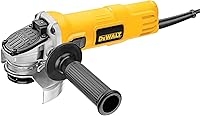
Can Angle Grinders Cut Wood?
Yes, an angle grinder can cut or shape wood with a suitable wood-carving attachment, but it's best for rough work rather than precise cuts. Match the attachment to your grinder, secure the wood, and use a saw for straight cuts.
On this page (10 sections)
- Can angle grinders cut wood safely?
- Which wood attachment suits the job?
- What wood jobs fit a grinder?
- Why can wood make an angle grinder kick back?
- How should you set up a grinder to cut wood?
- How can you limit dust and flying chips?
- What tool should you choose for clean cuts or sanding?
- Can an angle grinder cut plywood?
- When should you skip a grinder for wood?
- Can angle grinders cut wood, and when should you choose one?
Yes, angle grinders can cut or shape wood with a suitable wood-carving attachment, but they are a poor choice for precise straight cuts. Use a wood-rated attachment that fits your grinder, secure the work, and keep the guard and side handle installed.
A grinder removes material quickly, which can help with rough shaping and carving. That speed also makes it harder to guide than a saw, so choose it for jobs where a freehand finish is acceptable.
Can angle grinders cut wood safely?
They can cut or shape wood with an attachment designed for wood and approved for your grinder. A grinder is better suited to rough shaping and small trimming than long, straight cuts.
Never use a standard metal cut-off wheel on wood. It isn't designed for that material, and a wheel that catches can jerk the grinder toward you.
Before fitting an attachment, check its purpose, maximum speed, diameter, arbor size, and compatibility with your grinder. The grinder manual and attachment instructions should agree on the setup.
Our guide to angle grinder discs and their uses explains how cutting, grinding, and flap discs differ. For a straight rip or crosscut, a circular saw or jigsaw is usually easier to guide.
Which wood attachment suits the job?
Choose an attachment specifically made for wood carving or shaping, then confirm its fit and speed rating. Skip any wheel whose intended material or use is unclear.
The Pomsare 5-piece set has flat, curved, inclined, and parallel profiles for carving, shaping, grinding, and cutting wood. It fits many 4, 4.5, and 5 inch grinders with a 7/8 inch or M10 arbor, and includes reducing bushings for a 5/8 inch arbor.
This set suits DIY users who want to rough-shape or carve small areas with a compatible grinder. Skip it if you need a clean, repeatable edge, plan to cut long boards, or can't confirm that the attachment fits your grinder.
Check the manual before fitting the discs. Stop if the arbor, guard, speed limit, or attachment instructions don't match your tool; don't remove a guard to make a disc fit.
What wood jobs fit a grinder?
A grinder is most useful for rough shaping, carving, and trimming where a freehand finish is acceptable. Its compact body can reach spots where a larger saw is awkward, but it removes wood aggressively.
Work in shallow passes and keep both hands on the tool. Let the attachment do the work instead of pressing hard, which can make it harder to control.
Try the approach on scrap wood before working on the finished piece. Start with a light pass to see how quickly the attachment removes material, then adjust your grip and angle while the tool is off the work.
A face shield can add coverage, but it doesn't replace safety glasses or goggles. Wood chips can travel around a visor, so follow the grinder maker's eye-protection guidance and use respiratory protection suited to the dust.
Don't use a carving disc for fine sanding. A random orbit sander suits smoothing and finish work, while a belt sander can handle broader sanding.
Why can wood make an angle grinder kick back?
Wood can catch a rotating attachment and make the grinder jump or twist suddenly. Knots, edges, deep cuts, and excessive pressure can make control more difficult.
Hold the grinder with both hands and keep your body out of its line of travel. Clamp the wood so it can't shift, and check for nails, screws, or other hidden objects before starting.
Keep the guard in place and use the side handle. Read our guide to angle grinder safety and kickback basics before using a grinder on wood.
If the tool binds, release the switch and wait for the attachment to stop before moving it. Don't pull a spinning disc out of a stuck cut.
How should you set up a grinder to cut wood?
Start with the manuals, a compatible wood attachment, and a firmly secured workpiece. Inspect the attachment for damage and make sure the guard can be installed as directed.
- Unplug a corded grinder or remove its battery before changing attachments.
- Confirm the attachment fits the spindle and matches the grinder's speed limit.
- Refit the guard and side handle according to the tool manual.
- Secure the wood on a stable work surface, with room for the tool to move.
- Stand clear and run the grinder briefly without touching the work.
- Make a shallow pass while holding the grinder with both hands.
Keep other people clear of the work area. Don't start if the disc is damaged, the guard is missing, or the attachment instructions don't approve your setup.
How can you limit dust and flying chips?
Use eye, hearing, and respiratory protection, and keep bystanders away. Grinding wood can throw chips and create dust, so work in a ventilated area and follow the tool and attachment instructions.
The NoCry face shield has an impact-resistant polycarbonate visor, adjustable headgear, and four visor positions. It adds face coverage during grinding, but pair it with safety glasses or goggles because a visor alone may not protect your eyes from every direction.
The shield is a fit for users who want an adjustable visor and wear glasses underneath. Skip it as your only eye protection, and choose respiratory protection suited to the material and dust level.
Keep loose sleeves, hair, and jewelry away from the rotating tool. Don't wear gloves if your grinder manual warns against them, and pause if dust or chips keep obscuring your view.
What tool should you choose for clean cuts or sanding?
Choose a saw for long, straight, or repeatable cuts, and a sander for smoothing wood. A grinder's freehand action makes it less suited to accuracy and consistent edges.
A circular saw is a better fit for straight cuts in boards or sheet material. A jigsaw can handle curves and cutouts, while a hand saw may be enough for a small trim.
The DEWALT DWE6423 is a corded, 5 inch variable-speed random orbit sander with a 3 amp motor and a dust bag. It suits users smoothing a cut or shaping marks; skip it when the task is cutting wood.
The Metabo HPT SB8V2 is a variable-speed belt sander with a 3 x 21 inch belt and dust bag. It suits broader sanding work; an orbital sander is easier to handle for smaller finishing areas.
Measure and mark the cut, then use a saw's fence or guide when you need a straight edge. For grinder setup details, see angle grinder parts explained, including the guard, spindle lock, and handle.
Can an angle grinder cut plywood?
A grinder with a suitable wood attachment may remove material from plywood, but it is difficult to guide for a clean straight cut. A circular saw or jigsaw is a better choice for most plywood work.
Plywood can splinter, and a grinder can wander from a marked line. Support the sheet close to the cut, clamp it securely, and use a saw blade intended for the material.
Avoid cutting into a surface where you can't see what's underneath. Check for hidden cables, pipes, fasteners, and supports before starting.
When should you skip a grinder for wood?
Skip the grinder when a cut must be straight, clean, or tightly controlled. Choose another tool if the wood is loose, the attachment is uncertain, or the guard can't be used correctly.
Don't use a grinder for plunge cuts or deep cuts that can trap the attachment. If the work involves a large board, a long cut, or repeated matching cuts, use a saw designed for that job.
If the grinder feels unstable or starts to bind, stop and rethink the setup. Don't force a cut to keep the project moving.
Can angle grinders cut wood, and when should you choose one?
Choose a grinder for rough shaping or small carving jobs with a compatible wood attachment. Choose a circular saw or jigsaw for straight cuts, and a sander for smoothing.
Before you start, confirm the attachment fit and speed rating, clamp the wood, and keep the guard and side handle installed. For more setup guidance, see angle grinder sizes and how to choose.
Frequently asked questions
Can an angle grinder cut wood?
Yes, an angle grinder can remove or cut wood with a wood-carving attachment made for the grinder and the job. It is better suited to rough shaping, carving, and trimming than precise straight cuts.
Keep the work secured, use the guard, and follow both tool and attachment instructions.
Can you use a metal cut-off wheel on wood?
No. A metal cut-off wheel is made for metal, and using it on wood can cause binding, kickback, or loss of control.
Choose an attachment specifically made for wood and approved for your grinder, or use a saw designed for the cut.
Is a circular saw safer than an angle grinder for wood?
For long, straight cuts, a circular saw is usually easier to guide because its base rests on the work and its blade is designed for sawing. Any powered cutting tool can injure you, so use its guard, secure the material, and follow the manual.
What should I wear when carving wood with an angle grinder?
Wear eye protection, hearing protection, and suitable respiratory protection for the dust, along with clothing that can't catch on the tool. A face shield can add coverage, but it does not replace safety glasses or goggles.
Follow the grinder and attachment makers' protective-gear instructions.