What Size Angle Grinder for Cutting Bricks?
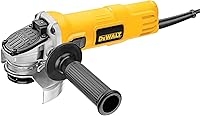
For most brick cutting, a 4-1/2 inch angle grinder with a 4-1/2 inch diamond blade is the right size. It cuts a standard brick with scoring on both faces and stays light enough to control along a marked line. Step up to a 5 inch or 7 inch grinder only when you need deeper cuts or faster work on long runs.
On this page (8 sections)
- What size angle grinder cuts bricks?
- Which blade size matches each grinder?
- How does brick type change the size you need?
- Is a 4-1/2 inch grinder enough for a full brick?
- What grinder and blade should you use for bricks?
- How do you set up and cut a brick straight?
- What size grinder fits thin brick and small repairs?
- What size angle grinder for cutting bricks fits your job?
For cutting bricks, match the grinder to the brick's width and your cut depth, not to the biggest tool you can buy. A 4-1/2 inch angle grinder with a matching diamond blade handles standard bricks and gives the best mix of depth, control and weight.
Most bricks fall within the reach of that size. A larger grinder earns its place only when the work is long or the brick is thick.
This guide walks through the sizes, the blade match and the setup so your cut stays straight and safe.
What size angle grinder cuts bricks?
A 4-1/2 inch grinder is the standard choice for brick cutting. It reaches through a standard 3-5/8 inch brick when you score both faces and remains light enough to guide along a line.
A 5 inch or 7 inch grinder cuts deeper and faster but adds weight and cost.
The table below puts the common sizes side by side for brick work.
| Grinder size | Best for | Typical cut depth | Trade-off |
|---|---|---|---|
| 4 inch | Thin brick, mortar raking, light grooves | Shallow | Short blade reach for full bricks |
| 4-1/2 inch | Standard bricks with scoring on both faces | About 2-1/4 inches | Needs both-side scoring for full bricks |
| 5 inch | Faster cutting and denser bricks | Deeper than 4-1/2 inch | Slightly heavier and wider |
| 7 inch | Long runs and thick block | Deepest | Heavy and hard to control on detail |
Why the blade diameter matters more than motor size
The blade diameter sets how deep you can cut. A 4-1/2 inch blade gives about 4-1/2 inches of blade, and only part of that sits below the guard when you cut.
The reach you actually get is the blade's radius plus the depth the guard allows. A 4-1/2 inch blade's radius is about 2-1/4 inches, so that is roughly how deep it cuts.
The motor decides speed and stamina. A 7.5 amp grinder like the Makita 9557PB spins its blade fast enough for brick and keeps up through repeated cuts.
A weak motor bogs down and overheats in dense brick.
The two numbers work together, and the order matters. A big motor on a small blade still cannot cut deeper than the blade reaches.
A small motor on a large blade cannot spin it steadily. So size the blade to the brick first, then pick a grinder with the power to spin that blade without stalling.
Our angle grinder sizes comparison covers the full range in more detail.
Which blade size matches each grinder?
Match the blade to the grinder's rated wheel size, and match the arbor to the blade's hole. A 4-1/2 inch grinder takes a 4-1/2 inch blade, never a larger one.
The blade's arbor should fit the grinder spindle, usually 7/8 inch or 5/8 inch.
Blade type matters too. A diamond blade grinds through brick and masonry with segmented edges that clear dust and run cooler.
An abrasive disc wears down faster on dense brick and makes more dust.
How to check blade and grinder compatibility
Check the grinder's wheel size and arbor size against the blade's label. A blade rated for the grinder's size and speed fits safely.
Anything larger or slower-rated is the wrong fit.
The ZORUNNA set shows how the numbers line up in practice. Its blades are 4-1/2 inches across with a 1/4 inch segment width, and the arbor is 7/8 inch to 5/8 inch so it covers both common spindle sizes.
That range means the blade seats on a Makita spindle without a separate adapter.
Also confirm the blade is for masonry, not metal or wood. A brick blade needs diamond segments or a masonry-rated abrasive, and the guard must stay on during the cut.
Segmented edges are the tell for masonry blades, because the gaps between segments let air in and dust out while the blade spins.
Our angle grinder discs guide explains the types and what each one cuts. Keep the guard fitted and the blade rated for the grinder's speed.
How does brick type change the size you need?
Brick type changes how hard the blade works. Standard clay bricks cut easily with a 4-1/2 inch grinder.
Dense engineering bricks and thick blocks wear blades faster and reward a 5 inch or 7 inch grinder with more power and reach.
Here's how common brick types fit the size decision.
- Standard clay brick: 4-1/2 inch grinder, scoring both faces, moderate blade wear.
- Engineering brick: 5 inch grinder for speed and blade life; 4-1/2 inch works on small jobs with lighter passes.
- Thin brick veneer: 4 inch grinder is fine because the brick is shallow.
- Concrete block: a 7 inch grinder suits thick block; see our guide to the best angle grinder for cutting concrete.
Harder brick means more heat and more blade wear. Let the blade do the work, keep the cut shallow and steady, and stop if the blade gets hot.
Our angle grinder buying guide helps you weigh motor power and size for different materials.
The diamond segments in a brick blade are what absorb this wear. The ZORUNNA set uses sintered diamond segments with a coarser grit for wear resistance, and ZORUNNA says the larger particles and thicker blade suit thicker concrete and stone rather than thin tile.
That describes brick and block work well, where the material is dense and the cut is wide.
Is a 4-1/2 inch grinder enough for a full brick?
Yes. A 4-1/2 inch diamond blade cuts a standard 3-5/8 inch brick all the way through when you score both faces.
You score one side, follow the line, turn the brick and score the other face until the cuts meet. Thick bricks may need more than one pass on each side.
The both-side rule works because the brick's width is more than the blade's reach. A standard brick is 3-5/8 inches wide and 2-1/4 inches tall.
A 4-1/2 inch blade cuts roughly 2-1/4 inches deep, so it cannot pass through the width in one pass.
Bricks laid on edge or thick blocks change the math. A 4 inch deep cut exceeds a 4-1/2 inch blade's reach, so it needs a larger blade or scoring from both sides.
Measure your brick before you choose.
When a bigger grinder makes the cut easier
Long runs and dense brick are the two reasons to size up. A 5 inch grinder clears more material per pass and handles engineering brick without bogging down.
A 7 inch grinder suits thick block and repeated cuts.
Bigger grinders weigh more and are harder to control on a short line. The Makita 9557PB weighs 4.5 lbs with a small 2-1/2 inch diameter barrel, which is the weight and grip that keeps a short cut steady.
A 7 inch model is noticeably heavier and wants two hands and more room around the work.
For a few bricks or a tidy garden wall, the lighter 4-1/2 inch model stays the better choice. Size up only when the job asks for it.
If the run is long enough that blade changes start to slow you down, that is another sign the bigger tool earns its keep.
What grinder and blade should you use for bricks?
A 4-1/2 inch grinder with a masonry diamond blade covers most brick cutting. The Makita 9557PB paired with a 4-1/2 inch diamond blade is the setup we'd pick for standard bricks, garden walls and small paving jobs.
It's light, fast and easy to control.
The Makita 9557PB spins at 11,000 RPM and weighs 4.5 lbs, so it stays comfortable during repeated cuts. Its paddle switch and small barrel grip help control.
The spindle lock makes blade changes quick when you swap to a fresh disc. The 7.5 amp motor runs on 120 volts and draws 900 watts, and the AC/DC switch lets the grinder run from an alternative power source when a wall outlet is not handy.
The kit includes a grinding wheel, wrench, side handle, flange and wheel guard.
The ZORUNNA blades have a 7/8 inch to 5/8 inch arbor and segmented edges that clear dust. Three blades in the set means you have a spare when one wears.
They cut brick, block, concrete and masonry dry or wet. ZORUNNA also describes the segments as spark-free in operation with no burn marks left on the material, and the geared turbine edges are shaped to improve cooling and dust removal during the cut.
Brick cutting throws chips and dust. The NoCry shield is ANSI Z87+ certified with an anti-fog, anti-scratch visor and adjustable headgear.
Pair it with safety glasses and a dust mask for fuller protection. The visor is polycarbonate and up to 2x thicker than a basic shield, and it curves around the face to cover the sides as well as the front.
How do you set up and cut a brick straight?
Mark the cut on all visible faces, then set up the grinder so the blade follows the line. Score the brick first, then deepen the cut rather than forcing the blade through in one hard push.
A steady hand and a shallow pass keep the edge clean.
Follow these steps for a straight brick cut.
- Measure and mark the cut line on the brick with a pencil or chalk.
- Clamp the brick or set it firmly on a stable surface so it can't shift.
- Fit the diamond blade, keep the guard on and check the arbor nut is tight.
- Put on your face shield, safety glasses, dust mask and hearing protection.
- Start the grinder away from the brick and let it reach full speed.
- Score along the line with light passes, then deepen until the blade exits the far face.
- Turn the brick and repeat if the cut needs cleaning up.
Keep the blade square to the brick and don't twist it sideways. Side pressure can chip the edge and strain the blade.
Let the blade spin freely and move the grinder along the line at an even pace. ZORUNNA's instructions say the same thing in blunt terms: no curves and no side grinding, so keep the blade in its own plane.
Dust control matters. Work outdoors or in a ventilated space, and use a dust mask.
If you cut wet, keep the water away from the grinder's motor and follow the blade's wet-cutting instructions. The ZORUNNA set is rated for both dry and wet cutting, so you can choose the method that suits the spot.
Safety rules for brick cutting
Wear a face shield over safety glasses, plus hearing protection, a dust mask and gloves. Keep the guard on the grinder and never remove it to fit a bigger blade.
Hold the grinder with both hands and keep the cord clear of the cut.
The NoCry shield fits over prescription glasses, so it works as the outer layer while your everyday glasses sit underneath. Its ratchet knob and pin lock set the fit, and the visor tilts through four positions, so you can angle it to block chips without blocking your view of the line.
The shield ships with a soft sweatband and an extra set of three.
Let the blade stop fully before setting the grinder down. Don't force a dull blade; swap it for a fresh one from the set.
A sharp blade cuts straighter and runs cooler. Inspect the blade before each use, as ZORUNNA's instructions advise, and match the blade to the tool's rotation direction before you start.
What size grinder fits thin brick and small repairs?
A 4 inch or 4-1/2 inch grinder suits thin brick, mortar raking and small repairs. Small jobs don't need a big grinder.
The lighter tool gives better control along short lines and tight corners.
Thin brick veneer is shallow, so a 4 inch blade reaches through without extra depth. For mortar raking between bricks, a 4 inch grinder with a thin diamond blade works well.
Keep the passes light so you don't gouge the brick faces.
For small repairs, a 4-1/2 inch grinder still gives useful reach without the weight of a 7 inch model. The Makita's small barrel and 4.5 lb weight make it easy to hold at odd angles, such as when you rake mortar out of a joint or trim a brick already set in a wall.
Choose the lighter size when the job is a few bricks or a short repair, and size up only when the work grows. If you are only cutting thin brick, the short blade reach is not a limit, because the material is shallow.
What size angle grinder for cutting bricks fits your job?
Match the grinder to the brick, not the other way around. Pick a 4-1/2 inch grinder for standard bricks, thin brick and most repairs.
Pick a 5 inch grinder for engineering brick and faster cutting. Pick a 7 inch grinder only for thick block and long runs.
The Makita 9557PB with the ZORUNNA diamond blade set is the pairing we'd start with for most brick work. Add the NoCry face shield and you have the core of a safe, straight-cutting setup.
For a wider look at sizes and disc types, keep our angle grinder sizes and angle grinder discs guides handy.
Before you order, check the exact blade arbor size against your grinder's spindle. A blade that fits the size but not the arbor won't run safely.
The Makita's 1-year limited warranty covers the tool, and the NoCry shield carries a lifetime warranty, so both pieces of the kit are backed.
Frequently asked questions
Can I cut bricks with a 4 inch angle grinder?
A 4 inch grinder can cut thin brick and shallow grooves, but its blade reach is short for a full standard brick. For typical 3-5/8 inch bricks, a 4-1/2 inch grinder gives more depth and speed.
Check your brick's width before choosing.
Is a diamond blade better than an abrasive disc for bricks?
A diamond blade is the better long-term choice for brick and masonry because its diamond segments grind the material rather than wearing away like an abrasive disc. It also runs cooler with segmented edges.
Abrasive discs are cheaper but wear faster on dense brick.
What size blade fits a 4-1/2 inch angle grinder?
A 4-1/2 inch angle grinder takes a 4-1/2 inch blade with a 7/8 inch or 5/8 inch arbor. Never fit a larger blade than the grinder is rated for, because the extra diameter can exceed the guard and the tool's safe speed limit.
Can I cut a brick all the way through with one pass?
No. A 4-1/2 inch blade cuts roughly 2-1/4 inches deep, so a full standard brick needs scoring on both faces to meet in the middle.
Thicker bricks and deep cuts need the same both-side approach.
Let the blade do the work and keep the cut shallow and steady.
Do I need a bigger grinder for hard engineering bricks?
Hard engineering bricks cut more slowly and wear blades faster. A 5 inch grinder with a quality diamond blade gives more speed and blade life for dense bricks.
On a few bricks a 4-1/2 inch model still works, just take more time and lighter passes.
Is a face shield enough protection when cutting bricks?
A face shield protects your eyes and face from chips and dust, but pair it with safety glasses, hearing protection, a dust mask and gloves. A certified shield like an ANSI Z87+ model adds impact protection.
Always read the grinder and blade instructions before cutting.