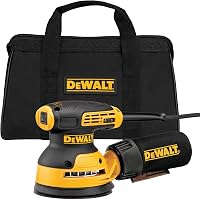
9 Best Belt Sanders for Wood Projects (October 2026)
The best belt sanders for wood projects include the Metabo HPT SB8V2 3 x 21 Inch Belt Sander for broad wood surfaces, the DEWALT DCW220B 20V MAX Cordless Belt Sander for cordless projects, and the WEN 6502T Benchtop Belt and Disc Sander for fixed bench sanding.
On this page (8 sections)
- The best belt sanders for wood projects
- How do you choose the best belt sander for wood?
- What belt sander size works for wood projects?
- How should you set up a belt sander before sanding?
- How do you avoid gouges and uneven sanding?
- What belt sander mistakes should you avoid?
- When should you choose a belt sander over another sander?
- Which belt sander should you pick?
The best belt sander for most wood projects is the Metabo HPT SB8V2, with a variable speed dial and a clear front cover for visibility near a surface. Choose the DEWALT DCW220B for cordless work or the WEN 6502T if you want a fixed bench machine with both a belt and disc.
A belt sander removes wood quickly, so it suits flattening boards, smoothing rough edges and stripping old finishes. It can also leave scratches or round an edge if you hold it in one place or press down too hard.
If you are deciding between sanding styles, read our belt sander vs orbital sander comparison. For a wider look at the workshop, see best bench grinders for home shops and bench grinder wheel types.
Our picks at a glance
-
1
 Best for broad wood surfaces
Metabo HPT SB8V2 3 x 21 Inch Belt Sander
8.7/10 our score
See it on Amazon -
2
 Best for cordless projects
DEWALT DCW220B 20V MAX Cordless Belt Sander
8.6/10 our score
See it on Amazon -
3
 Best for fixed bench sanding
WEN 6502T Benchtop Belt and Disc Sander
8.4/10 our score
See it on Amazon
- 4
 Check it
Makita 9032 3/8 x 21 Inch Compact Belt Sander
Best for narrow details - 5
 Check it
WEN HB424V 4 x 24 Inch Variable Speed Belt Sander
Best for handheld or bench use - 6
 Check it
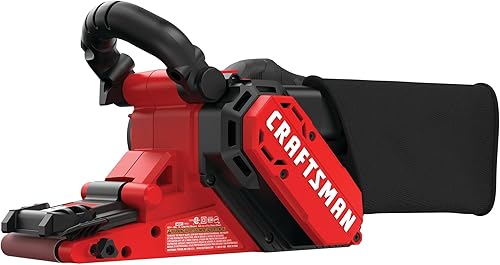
CRAFTSMAN CMEW213 3 x 21 Inch Belt Sander
Best for sanding near adjoining surfaces - 7
 Check it
Jellas 7-Amp 3 x 21 Inch Belt Sander
Best for a ready-to-use belt set - 8
 Check it
Triton TA1200BS 3 x 21 Inch Belt Sander
Best for variable-speed stock removal - 9
 Check it
BLACK+DECKER DS321 3 x 21 Inch Belt Sander
Best for edges and vertical surfaces
The best belt sanders for wood projects
The Metabo HPT is the most balanced handheld choice here, while the other picks suit cordless work, detail sanding or a fixed bench setup. Compare belt width, speed control and how you plan to hold the workpiece.
Metabo HPT SB8V2 3 x 21 Inch Belt Sander: Best for broad wood surfaces
- 3 x 21 in belt
- 9 amp motor
- Variable speed dial
- Clear front cover
The clear front cover helps you see the sanding area near an edge, and the variable speed dial suits work that needs more control.
Pros
- Variable speed dial
- Clear front cover
- Dust bag included
Cons
- Corded
The Metabo HPT SB8V2 is a strong general-purpose pick for sanding boards, doors and other broad wood surfaces. Its 3 x 21 in belt offers more coverage than a narrow detail belt, and the variable speed dial lets you adjust the pace for different tasks.
The clear front cover helps you see the sanding area when working near a surface. A left-mounted dust bag is positioned to help with corner sanding, and the design is flush for sanding evenly across a surface.
This is a corded tool with a 9 amp motor. The kit includes a sanding belt and dust bag, so you can begin with the included items and add other grits for later sanding stages.
Choose it if you want a conventional handheld belt sander with speed adjustment and visibility near edges. It is less suited to cramped detail work than the narrow Makita 9032.
DEWALT DCW220B 20V MAX Cordless Belt Sander: Best for cordless projects
- 20V MAX battery power
- Brushless motor
- Variable speed trigger and 25-speed dial
- Tool-free belt release
Cordless power and a variable speed control suit jobs where a cord would get in the way. It is a tool-only model.
Pros
- Cordless operation
- 25-speed selection dial
- Quick-release belt system
Cons
- Battery and charger are not included
The DEWALT DCW220B suits woodworkers who need to move around a project without managing a power cord. Its 20V MAX brushless motor and variable speed trigger with a 25-speed selection dial give you control across different sanding tasks.
The 3 x 21 in belt keeps the working area similar to the top pick. A quick-release system changes belts without tools, and the overmolded auxiliary handle supports two-handed operation.
This is a tool-only model, so plan for a compatible battery and charger if you do not already have them. The DEWALT AirLock dust collection system is sold separately and offers up to 95% dust collection efficiency.
Choose it for mobile jobs where cordless operation matters. If most sanding happens at one bench, a corded tool or stationary machine may make more sense.
WEN 6502T Benchtop Belt and Disc Sander: Best for fixed bench sanding
- 4 x 36 in belt
- 6 in disc
- Belt tilts from 0 to 90 degrees
- Cast iron base
A benchtop setup pairs a long belt with a side disc for shaping and smoothing smaller workpieces at a fixed station.
Pros
- Belt and disc in one machine
- Tilting belt
- Cast iron base
Cons
- Requires a dedicated bench space
The WEN 6502T is a benchtop machine for shaping and smoothing smaller workpieces. Its 4 x 36 in belt and 6 in disc provide two sanding surfaces in one setup.
The belt tilts from 0 to 90 degrees, and its 4.3 amp motor runs at up to 3,600 rpm. The cast iron base helps prevent heavy vibration.
This model needs a dedicated, stable bench space. It is not a handheld sander for large panels, but it can be useful for repeat work on smaller parts and edges.
Choose it if you want both a belt and disc sander available at a fixed station. For work on long boards, a handheld model is easier to bring to the material.
Makita 9032 3/8 x 21 Inch Compact Belt Sander: Best for narrow details
- 3/8 x 21 in belt
- Variable speed dial
- Sanding arm pivots up to 100 degrees
- 4.4 amp motor
The narrow belt and pivoting arm help reach small or awkward areas that a wide belt may not fit.
Pros
- Narrow sanding belt
- Pivoting arm
- Variable speed control
Cons
- Narrow belt covers less area per pass
The Makita 9032 is built around a narrow 3/8 x 21 in belt, which suits detail work that a wider sander cannot reach. Its adjustable sanding arm pivots up to 100 degrees to access awkward areas.
The variable speed control ranges from 980 to 5,600 ft/min, so you can set the belt speed for the application. It is described for work on wood and steel, including fine carpentry and furniture making.
The narrow belt covers less wood with each pass than a 3 in belt. That makes it a focused choice for edges, corners and detailed shaping rather than broad stock removal.
Choose it for tight spaces and detail work. For large boards or faster coverage, pick a standard-width handheld belt sander.
WEN HB424V 4 x 24 Inch Variable Speed Belt Sander: Best for handheld or bench use
- 4 x 24 in belt
- 10 amp variable-speed motor
- Can attach to a benchtop
- Dust bag included
Use it by hand or attach it to a bench for an upward-facing sanding surface. The variable-speed range supports different wood tasks.
Pros
- Handheld or benchtop setup
- Variable speed
- Dust bag and belts included
Cons
- Wider belt needs room around the workpiece
The WEN HB424V can work as a handheld sander or attach to a benchtop in an upward-facing position. Its 4 x 24 in belt and 10 amp motor make it a wider option for removing material from larger pieces.
The variable-speed motor runs from 660 to 1,310 ft/min. A lock-on switch supports continuous sanding, and the quick-release lever helps when changing belts.
The kit includes a dust bag, dust port, two 80-grit belts, a rubber mounting pad and two clamps. The benchtop setup can help when you want to bring smaller pieces to the tool instead of moving the sander over the wood.
Choose it if you want to switch between handheld and bench use. Its wider belt and body need more room than a compact detail sander.
CRAFTSMAN CMEW213 3 x 21 Inch Belt Sander: Best for sanding near adjoining surfaces
- 3 x 21 in belt
- Angled belt design
- 7 amp motor
- Three-position overmolded handle
Its angled belt design is intended to sand closer to adjoining surfaces, while the three-position handle offers different grip options.
Pros
- Angled belt design
- Tool-free belt release
- Onboard dust bag
Cons
- Corded
The CRAFTSMAN CMEW213 is a corded 3 x 21 in sander with an angled belt design for working closer to adjoining surfaces. Its three-position overmolded handle gives you a choice of grip while sanding.
The 7 amp motor reaches a maximum belt speed of 800 ft/min, and a tool-free release helps with belt changes. The included dust bag collects particles at the tool.
Choose it if you often sand near a wall, rail or other surface where belt access matters. Its corded setup is better suited to a workshop or a job with a nearby outlet.
Jellas 7-Amp 3 x 21 Inch Belt Sander: Best for a ready-to-use belt set
- 3 x 21 in belt
- Six speed settings
- Ten sanding belts included
- Can be clamped to a table
The included belts cover several grits, and clamps let you turn the tool over for bench use.
Pros
- Ten belts included
- Variable speed knob
- Vacuum adapter included
Cons
- Check belt direction when installing a new belt
The Jellas 7-Amp belt sander offers variable speed through a six-setting dial and includes 10 sanding belts in several grits. That mix can help when a wood project moves from heavier removal to a smoother pass.
It can also be clamped to a table for bench use. The included dust bag detaches for cleaning, and a vacuum adapter offers another dust collection option.
Follow the belt's direction arrow when installing a new one. The sander also has a lock-on button and a 10 ft power cord.
Choose it if you want a set of belts and the option to clamp the tool down. Check the workspace for cord reach and room to secure the clamps.
Triton TA1200BS 3 x 21 Inch Belt Sander: Best for variable-speed stock removal
- 3 x 21 in belt
- 10 amp motor
- Variable speed control
- Inversion clamps included
Variable speed and inversion clamps give this sander two possible setups for workshop projects.
Pros
- 10 amp motor
- Belt tracking adjustment
- Side dust port
Cons
- Heavier than compact detail sanders
The Triton TA1200BS combines a 10 amp motor with variable speed control in a 3 x 21 in handheld sander. Its adjustable auxiliary handle and lock-on button support longer sanding tasks.
A belt tracking adjustment helps keep the belt aligned. The side dust port can connect to a dust bag or vacuum system, and inversion clamps are included for stationary use.
Choose it if you want a handheld sander that can also be clamped in an inverted position. Its size and setup are less focused on fine detail than the compact Makita.
BLACK+DECKER DS321 3 x 21 Inch Belt Sander: Best for edges and vertical surfaces
- 3 x 21 in belt
- Angled belt
- Three-position handle
- Retractable hood
The low-profile body and retractable hood expose the belt for work near adjoining surfaces and in tight spaces.
Pros
- Angled belt design
- Retractable hood
- Dust bag included
Cons
- Corded
The BLACK+DECKER DS321 has an angled belt and low-profile design for sanding close to adjoining surfaces or along vertical surfaces. Its retractable hood exposes the top of the belt for work in tighter spaces.
The 7 amp corded motor and three-position handle suit home workshop jobs, while the dust bag collects particles at the tool. The kit includes a medium-grit belt.
Choose it for edges and locations where the low profile helps you reach the work. For variable speed, look at the Metabo HPT or DEWALT instead.
How do you choose the best belt sander for wood?
Choose a belt sander by the size of the work, the access you need and how much control the task calls for. A wide belt covers more area, while a narrow belt can reach small details.
A 3 x 21 in sander is a practical middle ground for boards and general woodworking. The 4 in belt machines here suit wider surfaces or bench work, and the Makita's 3/8 in belt focuses on narrow details.
Variable speed helps when you need to adjust sanding pace for the material or task. The Metabo HPT, DEWALT, Makita, WEN HB424V, Jellas and Triton offer speed control in different forms.
Consider the setup too. Cordless power can help when moving around a large project, while a benchtop tool supports repeat sanding on smaller parts.
What belt sander size works for wood projects?
A 3 x 21 in belt sander works for many general woodworking jobs because it balances sanding area with reach. A 4 x 24 in or 4 x 36 in belt provides a wider working area, while a 3/8 in belt reaches narrower sections.
Match the tool to the largest surface you expect to sand. A detail sander can take longer on a board, and a wide belt may be difficult to guide in a tight corner.
How should you set up a belt sander before sanding?
Set up the belt sander with the work secured, the belt correctly installed and dust collection ready before you switch it on. Clear the cord path or confirm the battery is charged, then check the tool manual for any model-specific setup steps.
Choose a belt grit suited to the job. Coarse abrasives remove material faster but leave deeper scratches, so plan to move to finer grits as the surface improves rather than trying to make one coarse belt do every stage.
Check the belt direction arrow when the abrasive has one. On the Jellas, the belt arrow should match the arrow on the machine; incorrect direction can leave scratches and shorten belt life.
For a benchtop setup, clamp the tool firmly to a stable workbench and keep the workpiece supported. The WEN HB424V includes a rubber mounting pad and clamps, while the Triton and Jellas include clamps for inverted or table use.
How do you avoid gouges and uneven sanding?
Keep the sander moving and use light pressure to reduce gouges and uneven spots. Start it before the belt touches the wood, then lift it away before switching it off.
Work with the grain when possible, and practice on scrap wood before sanding a visible surface. Keep the tool flat and avoid stopping in one place, since a moving abrasive belt can remove material quickly.
Secure the workpiece and follow the sander manual for belt changes and dust collection. Connect dust collection where available and keep the work area clear of dust.
What belt sander mistakes should you avoid?
The most common belt sander mistakes are pressing too hard, lingering in one spot, tilting the tool and starting with an abrasive that removes too much wood. Each can leave dips or deep scratches that take more work to correct.
Keep both hands on the tool when its design allows, and guide it steadily instead of steering by force. On small parts, use a secure bench setup where appropriate so the workpiece stays controlled as it meets the belt.
Don't assume the dust bag captures all fine dust. Empty it as needed, connect a compatible extractor if the tool allows, and use suitable eye and respiratory protection for the material and workspace.
When should you choose a belt sander over another sander?
Choose a belt sander when you need faster material removal on a broad surface or rough edge. For a smoother finishing pass, an orbital sander may be easier to control.
The two tools serve different stages of a project. Our belt sander vs orbital sander guide compares their use, while our angle grinder safety guide covers protective habits for another common workshop tool.
Which belt sander should you pick?
Pick the Metabo HPT SB8V2 for general wood projects that benefit from a 3 x 21 in belt, variable speed and a clear front cover. Choose the DEWALT if cordless movement matters, or the WEN 6502T for stationary belt and disc sanding.
For narrow details, the Makita's pivoting arm and slim belt are the better fit. If you need one tool for handheld and benchtop work, consider the WEN HB424V; if you want to compare sanding styles first, read our belt sander and orbital sander comparison.
Our top 3 picks at a glance
-
1
Best for broad wood surfaces
Metabo HPT SB8V2 3 x 21 Inch Belt Sander
8.7/10 our score
See it on Amazon -
2
Best for cordless projects
DEWALT DCW220B 20V MAX Cordless Belt Sander
8.6/10 our score
See it on Amazon -
3
Best for fixed bench sanding
WEN 6502T Benchtop Belt and Disc Sander
8.4/10 our score
See it on Amazon
Frequently asked questions
What is a belt sander best for?
A belt sander is best for quickly removing material from broad, fairly flat surfaces such as boards, doors and tabletops. Use a suitable grit and keep the tool moving with the grain to reduce deep marks.
For fine finishing or small details, a narrower belt sander or another sander type may be easier to control.
What size belt sander should I get for wood projects?
A 3 x 21 in handheld belt sander is a common fit for general woodworking because it balances sanding area with a manageable shape. A wider 4 in belt can suit larger surfaces or bench work, while a narrow 3/8 in belt can reach tighter details.
Match the belt size to the workpiece and the space you have to guide the tool.
Is a belt sander or orbital sander better for wood?
A belt sander removes material faster and suits rough or uneven surfaces. An orbital sander is usually easier to control for smoothing and final finishing.
The right choice depends on how much wood you need to remove and how smooth the surface must be.
See our belt sander vs orbital sander guide for the differences.
How do I control a belt sander on wood?
Secure the workpiece, hold the sander with both hands when the design allows, and let the belt do the work without pressing hard. Move steadily with the grain and keep the tool flat to avoid gouges or rounded edges.
Practice on scrap wood first, and follow the tool's manual for belt changes and dust collection.