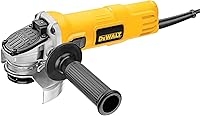
How Much Does an Angle Grinder Cost?
Most people spend budget to mid-range money on a corded 4-1/2 inch angle grinder, which covers the common cutting and grinding jobs at home. Cost climbs with size, motor power and cordless kits, and wheels, guards and safety gear add a little more to the total.
On this page (8 sections)
- How much does a basic angle grinder cost?
- Why does the angle grinder price vary so much?
- What do corded and cordless grinders each cost?
- What size of angle grinder fits your budget?
- What does the Makita 9557PB give you for the money?
- How much do wheels and safety gear add?
- Can you spend less without giving up too much?
- What should you budget for your first setup?
Most people spend budget to mid-range money on a corded 4-1/2 inch angle grinder, which covers the cutting and grinding jobs most homes need. Cordless kits and larger grinders cost more, and wheels plus safety gear add a small amount on top.
So when someone asks how much does an angle grinder cost, the honest answer is a range, not one figure. The total depends on what you plan to do with it.
A light DIY buyer and a weekly metalworker end up in different price brackets.
How much does a basic angle grinder cost?
A basic corded 4-1/2 inch grinder sits in the budget to mid-range band. It gives you the standard size for cutting rebar, pipe, bolts and thin sheet, and it's the model most first-time buyers start with.
The tool alone is the cheap part; the accessories decide how useful it is out of the box. Look for a grinder that ships with a wheel guard, side handle, wheel wrench and flange, because those parts are not optional extras.
Without a guard and a second grip point, the tool is harder to control and less safe to use, and our guide to angle grinder safety explains why the guard and handle matter on every cut.
Budget grinders often save money by leaving accessories out. Add the cost of a guard and handle and the cheap option stops looking cheap.
Check the box contents before you compare two tools, since a complete kit in the box is the true starting price.
Why does the angle grinder price vary so much?
Price moves with four things: size, motor power, cord or battery, and how much is in the box. A small 4-1/2 inch corded tool with a 7 amp motor is the low end.
A 9 inch grinder with a much stronger motor and heavier build sits at the top, and a cordless kit adds batteries and a charger.
Speed and amp ratings tell you what you are paying for. A 7.5 amp motor on a 4-1/2 inch grinder runs a no-load speed of 11,000 RPM, which is enough for steady metalwork.
A weaker motor bogs down in thick steel and wears out sooner. Watts give a second read on the same figure, so a 900 watt grinder is drawing close to 7.5 amps on a 120 volt outlet.
The angle grinder guide covers the main types and how the categories differ. Knowing the category first stops you comparing a budget 4-1/2 inch tool with a premium 9 inch model.
Once you know which class you need, the rest of the shopping is just picking the features you'll actually use.
What do corded and cordless grinders each cost?
Corded grinders cost less to buy; cordless grinders cost more up front but free you from an outlet. For most home workshops, a corded 4-1/2 inch grinder gives the best value.
It runs all day without a battery swap and the motor doesn't carry battery weight.
A cordless grinder earns its higher cost when you work away from power: a fence line, a driveway or a site with no outlet nearby. The kit price includes batteries and a charger, so the first purchase is the big one.
If you already own the same brand's batteries, a bare tool costs much less. Otherwise the kit is the only way in, and you pay for the power source as well as the motor.
Decide where you will use it before you decide on cord or battery. That single question does more to set your budget than any feature list.
Corded tools keep steady power for as long as they're plugged in, so a long grinding job stays steady.
What size of angle grinder fits your budget?
A 4-1/2 inch grinder is the cheapest size and the most versatile for home work. It takes the common 4-1/2 inch wheels, which are easy to find, and it handles most metal cutting and light grinding jobs.
Our comparison of angle grinder sizes walks through the full range.
- 4-1/2 inch: lowest cost, lightest weight, best wheel choice.
- 5 inch: a little more money for slightly deeper cuts.
- 7 inch and 9 inch: premium money for big motors and thick metal.
The bigger sizes cost more for three reasons: a larger motor, heavier guards and costlier wheels. Buy one only if your work needs the extra depth.
For most people, the 4-1/2 inch tool plus a few wheels covers the whole job. A 5 inch tool splits the difference, with slightly more reach while still taking wheels you can find at any hardware store.
What does the Makita 9557PB give you for the money?
The Makita 9557PB sits in the mid-range band and packs a 7.5 amp motor into a small body. Its 2-1/2 inch diameter barrel and 4.5 lb weight make it easy to hold through long cuts.
Makita uses labyrinth construction to seal the drive gear and bearings from dust, and the paddle switch works on AC or DC power. That last part matters if you ever run the grinder from a generator or a DC source away from the shop.
It ships with a grinding wheel, wrench, side handle, flange and wheel guard, so you get the safety parts in the box. The lock-on feature lets you run it continuously for long grinding sessions.
Makita backs it with a 1-year limited warranty. The spindle lock holds the shaft still so you can swap a wheel without hunting for a second wrench.
This is the pick for a buyer who wants one corded grinder that will hold up through regular metalwork. It costs more than the cheapest budget models but less than a cordless kit.
The 120 volt rating means it plugs into a standard outlet at home.
How much do wheels and safety gear add?
Wheels and safety gear are the small extras that make the grinder usable. A grinder without a wheel does nothing, and a face shield keeps sparks and debris away from your eyes.
Budget a modest amount for both and the total is still close to the grinder's own price.
The DEWALT DW8062B5 pack gives you 5 thin 4-1/2 inch cut-off wheels with a 7/8 inch arbor. The wheels are rated to 13,300 RPM and are built with two sheets of fiberglass for strength.
That rating leaves headroom over the Makita's 11,000 RPM no-load speed, so the wheel is not working at its limit. DEWALT says the Temper Point grains cut 50% longer than its earlier wheels.
They suit carbon steel, stainless and nickel-based alloys. The medium 60 grit and thin 0.045 inch edge are set up for fast, burr-free cuts in pipe and angle iron.
The NoCry face shield is ANSI Z87+ certified and curved to cover the whole face. Its visor has anti-fog and anti-scratch coating, and the ratchet headband adjusts in four positions.
It fits over prescription glasses and comes with spare sweatbands. The polycarbonate visor also blocks UV, which helps on sunny outdoor jobs.
Buy the shield with the grinder, not after the first spark hits your cheek, because safety glasses alone don't cover the lower face when you cut overhead. Treat the wheel pack and shield as part of the first purchase, not an upgrade you'll get to later.
Can you spend less without giving up too much?
Yes, a budget grinder with a guard, handle and a known amp rating is fine for light home jobs. Save the mid-range money for a tool you'll use often.
The savings come from a simpler motor, fewer accessories or a shorter warranty, not from a hidden difference in safety.
Cut the extras before you cut the safety parts. Skip the spare wheel pack if you only cut once a month.
Keep the guard and handle on the tool, every time. Our piece on whether angle grinders can cut wood shows where a general grinder saves you buying another tool.
Avoid the very cheapest tool with no guard in the box. It costs more once you buy the missing parts.
A budget model from a known brand with clear amp and speed figures is the safer way to save. Compare the included components line by line, because that is where the hidden cost sits.
What should you budget for your first setup?
Budget for the grinder, one spare wheel pack and a face shield, then add more as your work grows. For a corded 4-1/2 inch tool, that setup lands in budget to mid-range money.
The Makita 9557PB is the pick for most people, because the motor, sealed gear housing and included guard handle regular metalwork.
Spend less if you cut once or twice a year and the budget tool includes the safety parts. Spend mid-range if you cut weekly and want a grinder that holds its speed.
Go cordless only if you work away from an outlet and already own matching batteries. The spare wheel pack goes further than a single wheel, so five wheels can carry you through a run of weekend jobs.
The answer to how much does an angle grinder cost depends on the work, not the brand name. Set your size and cord type first, then buy the tool with a guard and handle in the box.
A few spare wheels and a face shield finish the kit without stretching the budget.
Frequently asked questions
How much should I budget for a first angle grinder?
Plan on budget to mid-range money for a corded 4-1/2 inch grinder with a guard, side handle and wrench included. Add a small amount for spare cut-off wheels and a face shield so you can start cutting metal the same day.
Why do cordless angle grinders cost more than corded ones?
A cordless grinder needs a motor, electronics and a battery mount, and the kit often includes batteries and a charger. That extra hardware pushes the price well above a corded tool of similar size, so cordless costs more unless you already own matching batteries.
Does a bigger angle grinder cost more?
Yes. A 7 inch or 9 inch grinder carries a larger motor, bigger guards and heavier wheels, so it costs more than a 4-1/2 inch model.
Buy the larger size only if you regularly cut thick steel or work on large surfaces.
Are cheap angle grinders worth buying?
A budget grinder can handle light home jobs, but check that it includes a wheel guard and side handle and lists its speed and amp rating. For regular metalwork, mid-range money buys better seals and a longer warranty, which usually works out cheaper over time.