How to Cut Bricks With an Angle Grinder
Fit a 4-1/2 inch diamond blade, mark the brick, and cut in two or three shallow passes while the grinder runs at full speed. Support the brick so the cut doesn't pinch the blade, and wear a face shield and dust mask throughout.
On this page (9 sections)
- What do you need before cutting bricks with an angle grinder?
- How do you choose the right blade for brick?
- How do you mark and score the brick?
- How do you cut a brick with an angle grinder step by step?
- How do you keep the cut straight and avoid chipping?
- What safety gear and dust control do you need?
- Which grinder and setup suit brick cutting?
- Common mistakes when cutting bricks with an angle grinder
- How to cut bricks with an angle grinder: the short version
Here's how to cut bricks with an angle grinder: fit a diamond or masonry blade, mark and score the face, then cut in shallow passes while the grinder runs at full speed. Support the brick firmly so the blade can't pinch, and wear a face shield and dust mask for the whole job.
The method matters more than the tool. A steady hand and a few passes give a straighter edge than forcing the blade through in one go, and a 4-1/2 inch grinder handles most single bricks without any special setup.
What do you need before cutting bricks with an angle grinder?
You need an angle grinder, a masonry-rated blade, eye and face protection, a dust mask, and a way to mark and support the brick. Add ear protection and gloves, since the cut is loud and brick edges are sharp.
Start with the angle grinder itself. A 4-1/2 inch model is the practical choice for single bricks, because the wheel cuts most single bricks through from each side.
Our guide to angle grinder sizes explains when a 5 or 6 inch model makes sense for block work.
For the blade, choose a diamond blade rated for masonry or a bonded masonry cut-off wheel. Diamond lasts longer in brick and keeps its edge as the abrasive surface wears.
A wood or metal wheel is the wrong choice here and can shatter or overheat.
Set up on a stable surface where the brick can't shift. A workbench with a clamp, or a sandbag under the brick, gives you a steady base.
Clear the area of anything that could catch the dust or trip you.
How do you choose the right blade for brick?
Choose a diamond blade or a masonry cut-off wheel rated for brick and concrete. Diamond is the better long-term buy if you'll cut more than a few bricks, and it stays cooler in long cuts.
The ZORUNNA set packs three 4.5 inch diamond blades with a 1/4 inch segment width. The arbor fits 7/8 inch and 5/8 inch spindles, so it mounts on most 4-1/2 inch grinders without an adapter.
ZORUNNA says the segments handle dry and wet cutting in brick, block, concrete and masonry.
Match the blade's maximum RPM to your grinder's speed before you mount it. A wheel rated below the grinder's no-load speed can fly apart.
Check the direction arrow on the blade too, since diamond segments only cut well the way they were designed to spin.
Skip diamond if you're cutting one or two bricks and already own a masonry wheel. A bonded wheel is cheaper, but it wears quickly in hard brick and throws more dust.
How do you mark and score the brick?
Draw the cut line on all four faces so the lines meet at the corners. A pencil or chalk line on each side lets you follow the cut from the top and check it from the edge.
A square helps you wrap the line around the brick accurately. For a straight face, mark from the reference edge rather than freehand, because a brick's texture makes a wandering line hard to correct.
Score the line lightly first. Run the blade along the marked face with almost no pressure to create a shallow groove.
That groove guides the full-depth passes and reduces chipping at the edges.
If the brick has a rough or textured face, score on the smoother side first and expect some breakout on the rough face. Plan for the rough face to face away from the finished wall, so a small chip stays hidden.
How do you cut a brick with an angle grinder step by step?
Cut in two or three passes at full speed, letting the blade do the work. A single forced pass overheats the wheel, wanders off the line and raises the risk of kickback.
- Clamp or support the brick so it can't move, with the cut line clear of the bench edge.
- Fit the blade, set the guard to cover the exposed wheel, and grip the grinder with both hands.
- Start the grinder away from the brick and let it reach full speed before touching down.
- Follow the scored line with light pressure for the first pass, about a third of the way through.
- Repeat along the same line for a second and third pass until the blade breaks through.
- For a deeper brick, flip it and cut from the opposite face to meet the first cut.
Keep the grinder moving steadily and don't stop mid-cut. A pause lets the blade heat and load up with brick dust.
If the blade starts to bind, back off, check the support and start again along the groove.
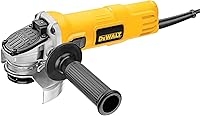
The Makita 9557PB runs a 7.5 amp motor with a no-load speed of 11,000 RPM. Its paddle switch shuts off when you release it, which is handy when you need to stop fast mid-cut.
Its 2-1/2 inch barrel and 4.5 lb weight keep it comfortable to hold, but always use it two-handed as the steps above say.
How do you keep the cut straight and avoid chipping?
Keep the cut straight by watching the line from the side rather than the top, and by letting the blade sit in the scored groove. Chipping drops when the first pass is light and the brick doesn't shift.
Hold the grinder so the blade is vertical to the brick face. Tilting it widens the kerf and produces a sloped edge.
Check the line at each corner as you go, and stop to correct early rather than forcing a correction near the end.
Support the overhanging piece as you break through. An unsupported edge snaps off and takes a chunk of the face with it.
A scrap block or a second person holding the offcut prevents that.
Expect a little chipping on the exit face no matter how careful you are. If the edge must look clean, score all four faces and cut from both sides so the breakout happens in the middle of the brick rather than at the corner.
What safety gear and dust control do you need?
Wear a face shield over safety glasses, a dust mask and ear protection, and cut outdoors or with good airflow. Brick dust contains silica, so keeping it out of your lungs matters more than speed.
The NoCry face shield curves around the face and its visor is ANSI Z87+ rated. Its anti-fog and anti-scratch coating keeps the visor clear, and it fits over prescription glasses.
The ratchet knob and four visor positions let you set it for comfort during long cutting sessions.
Gloves protect your hands from sharp brick edges and hot sparks. Keep the grinder's cord behind you and away from the cut, and never cut toward your body.
Check the blade for cracks before each use and replace it if the edge is damaged.
A light mist of water on the cut reduces dust, but keep water away from a corded grinder's motor and plug. A dust mask plus outdoor cutting is the safer dust plan for most home jobs.
Which grinder and setup suit brick cutting?
Pick a 4-1/2 inch angle grinder with a diamond blade for most brick jobs, and step up to a larger grinder only for thick blocks. The blade matters more than the grinder's brand for a clean cut.
The Makita 9557PB covers single bricks and light block work. Its 7.5 amp motor keeps speed up under load, and the paddle switch is safer than a slide switch when you need to stop quickly.
Its side handle fits on either side of the tool, so you can set up for left- or right-handed cutting.
For a quick check on whether a bigger grinder helps your project, see what size angle grinder for cutting bricks. Most single-brick cuts don't need more than 4-1/2 inches.
If you're also working with other materials, our guide to whether angle grinders can cut wood explains where the tool fits and where it doesn't. Keep a masonry blade reserved for brick and concrete so it stays sharp for the job it's built for.
Common mistakes when cutting bricks with an angle grinder
The biggest mistake is forcing a full-depth cut in one pass, which overheats the blade and makes the cut wander. Shallow passes take barely longer and give a much straighter edge.
Other mistakes to avoid:
- Cutting without supporting the offcut, so the brick snaps and chips.
- Using a wood or metal blade on brick.
- Cutting toward your body or with the guard removed.
- Skipping the dust mask and face shield.
- Tilting the grinder so the cut slopes.
- Stopping mid-cut and leaving the blade hot and loaded.
Fix the support and the pass depth first, and most other problems fall away. A scored line, a steady hand and a sharp blade do the rest.
How to cut bricks with an angle grinder: the short version
To cut bricks with an angle grinder, mark all four faces, score the line, and cut in two or three shallow passes at full speed with a diamond or masonry blade. Support the brick, keep the guard on, and wear a face shield and dust mask.
Choose the ZORUNNA diamond blades for repeated brick work, the Makita 9557PB for a grinder with a safe paddle switch, and the NoCry shield for clear, comfortable protection. For most home projects, that setup plus a steady hand is all you need.
Frequently asked questions
Can you cut a brick with a 4-1/2 inch grinder?
Yes. A 4-1/2 inch angle grinder cuts bricks up to about 1-1/4 inches deep from one side, which covers most single bricks in one pass.
Thicker bricks and blocks need a flip and a second cut from the other face.
Do you need water to cut bricks with an angle grinder?
No, a dry cut is normal for bricks. A light spray reduces dust and cools the blade, but water near a corded grinder adds a shock risk.
Wear a dust mask either way, since dry cutting throws fine silica dust.
Can you cut bricks with a wood or metal cutting disc?
No. Masonry needs an abrasive masonry wheel or a diamond blade.
A wood blade can snag and shatter, and a metal cut-off wheel loads up and overheats in brick.
Use only a wheel rated for masonry.
How long does it take to cut one brick?
A few seconds to about half a minute per brick in a standard 4-1/2 inch grinder. Harder bricks and deeper cuts take longer, and forcing the blade slows you down rather than speeding it up.
What should you do with the dust from cutting bricks?
Cut outdoors or with good airflow, and wear a dust mask. Brick dust contains silica, so keep bystanders away, mist the cut lightly if your grinder setup allows it, and sweep up afterward rather than blowing dust around.