How to Use a Flap Disc on an Angle Grinder
To use a flap disc on an angle grinder, mount it label-up, hold the grinder at a 15 to 20 degree angle, and let the grit do the work. Keep the disc flat against the surface with light pressure and even movement so the flaps wear evenly and the metal stays cool.
On this page (11 sections)
- What is a flap disc and what does it do on an angle grinder?
- How do you mount a flap disc on an angle grinder?
- How should you set the guard and grip before grinding?
- How do you hold the grinder at the right angle?
- How hard should you press, and how do you avoid burning the metal?
- How do you grind a weld or remove rust with a flap disc?
- What speed and grit should you choose?
- How do you get even wear and the longest life from a flap disc?
- What mistakes should you avoid when using a flap disc?
- Can you use a flap disc on wood or other materials?
- How do you keep the work area safe while grinding?
To use a flap disc on an angle grinder, mount the disc label-up, hold the tool at 15 to 20 degrees, and let the grit cut with light, even pressure. The flaps sit on a fiberglass backing, so the disc sands and blends as it grinds rather than gouging like a hard wheel.
What is a flap disc and what does it do on an angle grinder?
A flap disc is layered abrasive cloth on a fiberglass backing, and on an angle grinder it grinds, blends, deburrs and finishes metal in one pass. The overlapping flaps wear down and expose fresh grit as you work.
It replaces two steps in most metal jobs. A hard wheel shapes the weld, then a sanding disc smooths it.
A flap disc does both.
The EZARC set here is a 40 grit zirconia Type 29 in 4-1/2 inch size. Zirconia alumina lasts longer than aluminum oxide on steel and stainless, and the 40 grit is coarse enough for weld reinforcement and rust.
Type 29 discs have a beveled edge, so you can work into corners and along seams more easily than with a flat Type 27 disc. That bevel is why the disc runs best at 15 to 20 degrees.
How do you mount a flap disc on an angle grinder?
Mount the flap disc label side up, with the backing flat against the inner flange, then tighten the lock nut with the spindle lock engaged. Check the disc spins free by hand before you switch on.
Unplug the grinder, press the spindle lock and loosen the lock nut with the pin spanner. The nut turns counter to the wheel direction on most grinders.
Take off the old wheel and check the inner flange for grit. Fit the flap disc so the flaps face away from the tool body and the label shows.
A disc mounted upside down puts the fiberglass backing against the work and cuts poorly.
Refit the outer flange and lock nut and tighten with the spanner. Spin the disc by hand; it should turn freely without wobble or rubbing on the guard.
How should you set the guard and grip before grinding?
Set the wheel guard so its open side faces away from your body, fit the side handle on the hand you prefer, and grip the body with both hands.
Adjust the guard before mounting the disc so the opening sits where sparks fly away from you. A guard set to the wrong side throws debris into your face and hands.
Screw the side handle into one of the threaded holes; right-handed users often fit it on the left so the tool balances. Hold the main body with one hand and the side handle with the other.
Never hold a grinder by the guard or the disc.
Wear the safety gear before the tool starts. Safety glasses alone leave the lower face open, so a face shield over them is the usual choice for grinding.
Why a full face shield belongs in this setup
A face shield covers the face and throat area that glasses miss, and it's the layer that matters when a flap or a hot particle comes at you. The NoCry shield is ANSI Z87+ certified and curved to clear prescription glasses.
It has an anti-fog and anti-scratch coating on the polycarbonate visor and a ratchet headband with 4 angle positions. Pair it with safety glasses, hearing protection and a dust mask for rust or paint work.
How do you hold the grinder at the right angle?
Hold the grinder at 15 to 20 degrees to the work, with the flap edge contacting the metal and the disc face mostly flat. A shallower angle is gentler; a steeper one bites and burns.
Lay the disc almost flat on the surface and tilt the body up slightly. At 15 to 20 degrees the flap ends engage and the disc wears across its whole face.
Too flat wears a groove in the outer edge; too steep digs in and heats the metal fast.
Watch the sparks: a steady fan means the disc is working evenly, and a heavy shower means you're pressing too hard. Move in smooth, overlapping passes rather than holding it in one spot.
How hard should you press, and how do you avoid burning the metal?
Press lightly and let the grit cut; if you have to lean on the tool, the disc is worn or too fine for the job. Light pressure keeps the metal cool and makes the flap disc last longer.
Heavy pressure burns a bluish discoloration into steel and wears the flap edges unevenly. Stainless is especially prone to heat tint, so use a light touch and keep the disc moving.
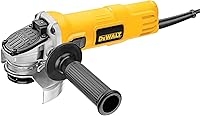
The Makita 9557PB runs a 7.5 amp motor at a no-load speed of 11,000 RPM, which is plenty for a 4-1/2 inch flap disc.
Its compact 2-1/2 inch barrel and 4.5 lb weight make it comfortable to hold at the shallow grinding angle. The labyrinth seals protect the gears and bearings from grinding dust.
If you're still choosing a tool, our guide to angle grinder sizes covers which diameter suits which job.
How do you grind a weld or remove rust with a flap disc?
Work along the weld in overlapping passes, starting light to knock down the crown and building up only as needed. The same method strips rust and paint without gouging the base metal.
Hold the disc at the shallow angle and run it along the seam in short, steady strokes. Let the flaps blend the weld into the plate rather than grinding a flat trench.
Check the profile often; a 40 grit disc removes metal quickly.
For rust or paint, keep the disc flat and overlap each pass by about half the disc width so the coating comes off evenly. Clean the surface as you go so you can see bare metal.
For blending and finishing, switch to a 60 or 80 grit disc for a smoother, brushed look on stainless.
What speed and grit should you choose?
Match the grit to the job and keep the grinder speed within the disc's rating. Coarse grits remove material, fine grits blend and finish, and the maximum RPM on the disc caps how fast the grinder may spin it.
| Job | Grit | Notes |
|---|---|---|
| Weld removal and heavy stock removal | 40 | Fastest cut, leaves deeper scratches |
| General grinding and rust removal | 60 | Good balance of speed and finish |
| Blending and edge work | 80 | Smooths without removing much metal |
| Light finishing on stainless | 120 | Slow, used for a brushed look |
The EZARC discs are rated to 13,300 RPM and fit a 4-1/2 inch grinder with a 7/8 inch arbor. Check that your grinder's top speed doesn't exceed the disc rating; most 4-1/2 inch grinders run below that, but confirm before mounting.
Our rundown of angle grinder discs covers cutting, grinding and flap types in more detail.
How do you get even wear and the longest life from a flap disc?
Get long life by keeping the disc flat, using light pressure and letting the flaps wear across the full face. Even wear is the sign that the angle and pressure are right.
Rotate the disc's contact point as you work rather than always using the same spot. A disc worn into a groove cuts slowly and leaves a wavy surface.
Store flap discs flat and dry; moisture softens the backing. Replace the disc when the abrasive cloth wears down to the backing.
Don't use a flap disc for cutting; it binds and risks kickback. Fit a dedicated cutting disc for that.
What mistakes should you avoid when using a flap disc?
The common mistakes are pressing too hard, holding too steep an angle, and running without the guard. Each one shortens the disc's life or makes the tool harder to control.
- Leaning on the grinder, which burns the metal and wears the flap edges unevenly.
- Tilting past about 20 degrees so the disc digs in and jumps.
- Removing the guard for "better access", which leaves broken flaps and grit uncontained.
- Using a flap disc to cut, which binds and risks kickback.
- Letting the disc overheat in one spot instead of moving across the work.
Can you use a flap disc on wood or other materials?
A flap disc can smooth and shape wood, but it clogs fast and the backing can catch on grain. Use it at a light angle and expect to clean the disc often.
An angle grinder is a rough tool for timber, and a dedicated sander gives better control. Our article on whether angle grinders can cut wood explains the limits and the safer options.
On concrete and masonry, a flap disc can dress edges and remove thin coatings, but a diamond cup wheel is the better choice for heavy surface work. On aluminum, use a disc rated for non-ferrous metal so it doesn't load up.
How do you keep the work area safe while grinding?
Keep the area safe by clearing flammable material, containing sparks and wearing the right gear. A flap disc throws a steady stream of hot grit, so safety starts before the first pass.
Clear sawdust, rags and paper from the bench and floor, keep a fire extinguisher within reach and work in a ventilated area. Fit the guard, the side handle and the face shield, tie back loose clothing and keep your hands clear of the spinning disc.
Let the disc stop fully before setting the grinder down, and unplug it before changing discs.
Choose a grinder you can control. Our angle grinder buying guide covers sizes, types and what to look for in a first or second tool.
Frequently asked questions
Should you use a flap disc on a grinder with the guard on?
Yes. Keep the wheel guard fitted and adjust it so the open side faces away from you.
The guard catches broken flaps and grit, and it costs you nothing in grinding performance.
Can a flap disc remove rust and paint as well as grind metal?
Yes. A coarse flap disc strips rust, mill scale and paint while leaving a smoother surface than a hard grinding wheel.
Use 40 or 60 grit for heavy removal and a finer grit for blending and finishing.
How long does a flap disc last?
It depends on grit, pressure and how hard you push. Zirconia flaps outlast aluminum oxide on steel, and even wear across the whole face is the sign of correct technique.
Replace the disc when the abrasive cloth is used up to the backing.