How to Cut Paving Slabs With an Angle Grinder
To cut a paving slab with an angle grinder, fit a diamond blade rated for masonry, mark the line, support the slab flat and cut in shallow passes while the blade spins into the face. Wear eye and face protection, keep both hands on the tool, and let the blade do the work.
On this page (9 sections)
- Which angle grinder and blade do you need for paving slabs?
- How do you mark and set up a paving slab for a straight cut?
- How do you make the cut step by step?
- How do you control dust and kickback while cutting?
- Can you cut curves and notches in a paving slab?
- How do you finish the edge and lay the slab?
- Which grinder size suits bigger slabs and long runs?
- What are the most common cutting mistakes?
- The bottom line on cutting paving slabs with an angle grinder
To cut a paving slab with an angle grinder, fit a diamond blade rated for masonry, mark the line, support the slab flat, and cut in shallow passes while the blade spins into the face. Wear eye and face protection, keep both hands on the tool, and let the blade do the work.
The job is a straight line in a heavy, gritty material, so the tool, the blade and the setup all matter. Get those three right and most slabs cut cleanly with no drama.
Which angle grinder and blade do you need for paving slabs?
You need a 4-1/2 inch grinder with a masonry diamond blade, because that size covers curbs, flagstones and most garden paving. The blade matters more than the grinder here: a segmented diamond disc shrugs off concrete grit, where an abrasive disc wears out fast.
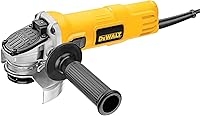
The DEWALT DWE402N runs a 4-1/2 in wheel and puts out 11,000 RPM, which is the working range the ZORUNNA blades are built for. Its Dust Ejection System sends grit out through the intake vents, and the One-Touch Guard turns 360 degrees so you can set it against the slab with a single action.
The ZORUNNA blades fit a 7/8 or 5/8 in arbor, so they suit most 4-1/2 in grinders. Three blades means you have a spare for the day one gets tired.
If you are still deciding on a tool, our guide to the angle grinder covers sizes and types before you buy.
How do you mark and set up a paving slab for a straight cut?
Mark the line with a pencil or chalk and score a shallow groove first, then support the whole slab on a flat surface so it cannot rock. A slab that moves mid-cut will grab the blade.
Lay the paving on two scrap blocks or a pallet, with the cut line over open space. That way the blade passes through into air rather than into the ground or your bench.
Keep the line on the waste side, then trim to it. A straight edge clamped or laid along the mark gives your eye a guide without the blade touching it, so cut slowly along the groove until the blade has a track to follow.
Wet the slab down if the day is dry and dusty. Water on the surface cuts airborne dust, but keep the cord and motor well away from puddles.
How do you keep the offcut from breaking near the end?
Support both halves and stop the cut just before the slab releases. Let the weight shift, then finish the last inch with the slab steady.
A scrap block under the far side does the job on your own. With a helper, have them hold the offcut flat and level while you finish.
How do you make the cut step by step?
Start the blade in the groove, cut about 1/4 inch deep, and repeat until the blade passes through. This is the core of how to cut paving slabs with an angle grinder safely: shallow passes, steady hands, no pushing.
- Put on eye protection, a face shield and a dust mask.
- Fit the diamond blade and check the guard is set right.
- Stand so the blade spins into the face, never pulling the tool toward you.
- Hold the grinder with both hands and start the motor away from the slab.
- Touch down at the start mark and draw a light pass down the line.
- Lift, check the groove, and repeat until the blade breaks through.
- Leave the slab in place until the motor stops and the blade is still.
Don't lean on the tool or twist it in the groove. Side pressure bends the blade and shows up as a curved or chipped edge.
How do you control dust and kickback while cutting?
Wear a face shield, eye protection and a mask, and stand out of the blade's path so grit and kickback miss your face. Dust is the main hazard on concrete, and kickback is the main risk to your hands.
A curved face shield deflects grit that comes off the top of the blade. The NoCry shield is ANSI Z87+ certified, and it fits over prescription glasses, which helps if you normally wear them on site.
Set the guard so the open blade points away from you and the sparks and dust go down and forward. Keep the grinder body between you and the cut line, and turn the guard rather than removing it to fit the cut.
The no lock-on paddle switch on the DEWALT matters here. If the blade grabs, your hand comes off and the motor stops, rather than the tool running on across the slab.
Our post on how to cut bricks with angle grinder covers the same kickback rules for the material next to your paving.
Can you cut curves and notches in a paving slab?
You can, but with a diamond blade you cut straight lines and join them, not a sweeping curve. A segmented disc cuts on its edge, so a curve means a series of shallow plunge cuts that follow the arc.
Mark the curve, cut short straight chords across it, then break out the waste. A small chisel tidies the edge.
For a tight notch, cut two parallel lines and knock the middle free from the open side.
Don't side-grind with a diamond blade to smooth a curve. That wears the segments unevenly and can crack the disc.
For a decorative shape, plan it as a few straight edges and one small clean-up cut.
The same limits apply to other materials: a grinder is a cut-off tool, not a router. If you have ever wondered whether you can use one on softer stock, our answer to can angle grinders cut wood explains where the tool stops being the right choice.
How do you finish the edge and lay the slab?
Knock off any sharp burr with a rubbing stone, then lay the slab on a full bed of mortar or sand. A clean, square edge sits closer to its neighbour and looks better on the finished patio.
Check the cut with a straight edge before you bed it. If the line wandered, trim a sliver off the high side rather than forcing the slab into place.
On a patio, keep a consistent joint gap with spacers. The cut face should sit against the next slab or the edge restraint, not against a wall where it cannot move.
Wipe the dust off the slab before laying. Dry grit under a mortar bed weakens the bond.
Which grinder size suits bigger slabs and long runs?
A 4-1/2 inch grinder handles the line on most slabs, but a bigger disc cuts deeper in one pass. If your paving is thick, a 7 inch grinder reduces the number of passes.
Our guide to angle grinder sizes lays out the reach and weight of each class.
For a run of many slabs, set up a cutting station: a pallet, two blocks and a straight edge. Mark, cut and stack in batches.
Keep the blade cool by letting it run free for a few seconds between cuts.
A helper who carries and steadies slabs keeps your hands on the tool and the cut line steady. That alone speeds the job more than a bigger motor.
What are the most common cutting mistakes?
Most failed slab cuts come from forcing a worn blade, an unsupported slab or a twisted tool. Each one chips the edge or grabs the disc.
A worn diamond blade glazes and stops cutting, so you push harder. Replace it or dress it in a scrap block instead.
Never push a dull blade through good paving.
Cutting on grass or loose sand lets the slab shift. Cut on blocks every time.
Standing in line with the blade invites kickback. Stand to one side.
Skipping the mask on concrete is the mistake people regret. Wear it for the whole job, not just the first slab.
The bottom line on cutting paving slabs with an angle grinder
The rule is simple: diamond blade, flat slab, shallow passes, full face protection. Do those four things and how to cut paving slabs with an angle grinder stops being a worry and becomes a routine job.
Pick the DEWALT DWE402N for the no lock-on switch and the dust system, the ZORUNNA blades for dry or wet masonry cutting, and the NoCry shield to keep grit off your face. Read the safety steps once before the first cut, then work steadily and let the blade do the work.
Frequently asked questions
Can I cut a paving slab with a wood-cutting disc?
No. A wood or metal disc is not made for the abrasive grit of concrete and can shatter or grab.
Fit a diamond blade rated for masonry, and use a grinder whose guard covers the blade type you're running.
How deep should each pass be?
Start at about 1/4 inch and add another shallow pass each time rather than forcing the blade through. Light passes keep the blade cooler, cut straighter, and reduce the chance of the slab chipping at the edge.
Do I need water when cutting paving slabs?
Water helps with dust and blade life, but a corded grinder is not a wet tool unless you stay well clear of the motor. Most people cut dry with a dust mask and eye protection; follow the blade maker's dry or wet guidance.
How do I stop the slab from breaking at the end of a cut?
Support both halves of the slab, cut a shallow groove first, and stop before the weight shifts. A helper holding the offcut side, or a scrap block under it, keeps the slab from pinching the blade near the end.